
Master imap settings for google to boost B2B outreach
Discover imap settings for google and learn how to configure Gmail and Google Workspace for outreach, boosting deliverability and replies.
Read article
Sending cold emails that land in the primary inbox at scale is a complex technical challenge. Using standard email marketing platforms for high-volume, un-opted-in outreach is a recipe for landing in spam, getting your domain blacklisted, and wasting significant engineering and sales resources. The problem isn't your copy or your lead list; it’s the underlying infrastructure failing to manage the intricacies of sender reputation, IP health, and authentication protocols.
This guide bypasses generic advice and dives straight into the specialized platforms that power successful outreach operations. We are focusing on the best cold email infrastructure tools that handle the heavy lifting: automated mailbox warm-up, domain rotation, DNS record management (SPF, DKIM, DMARC), and deliverability monitoring. These are the systems that B2B agencies, RevOps teams, and high-growth startups use to build a resilient, scalable, and high-performing outreach engine.
Forget surface-level reviews. We'll provide a comprehensive breakdown of each tool, including:
Each platform analysis includes screenshots and direct links, so you can quickly evaluate the best options for your specific needs. This article provides a clear roadmap to building a cold email stack that delivers results, not just sends emails.
InboxKit stands out as a premier turnkey solution for teams that require reliable, scalable, and automated cold email infrastructure. As an official Google Cloud and Microsoft Partner, it moves beyond reseller accounts to provision genuine Google Workspace and Microsoft 365 mailboxes. This foundational strength ensures that from day one, your outreach is built on a high-trust platform, making it a top contender among the best cold email infrastructure tools.
The platform’s core value is its hands-off approach to deliverability. It automates the entire technical setup, including SPF, DKIM, and DMARC records, a process that can be a significant hurdle for teams managing DNS manually. Mailboxes are typically ready in under 10 minutes, complete with US-based IP addresses, which is a critical factor for maintaining a positive sender reputation when targeting North American markets.
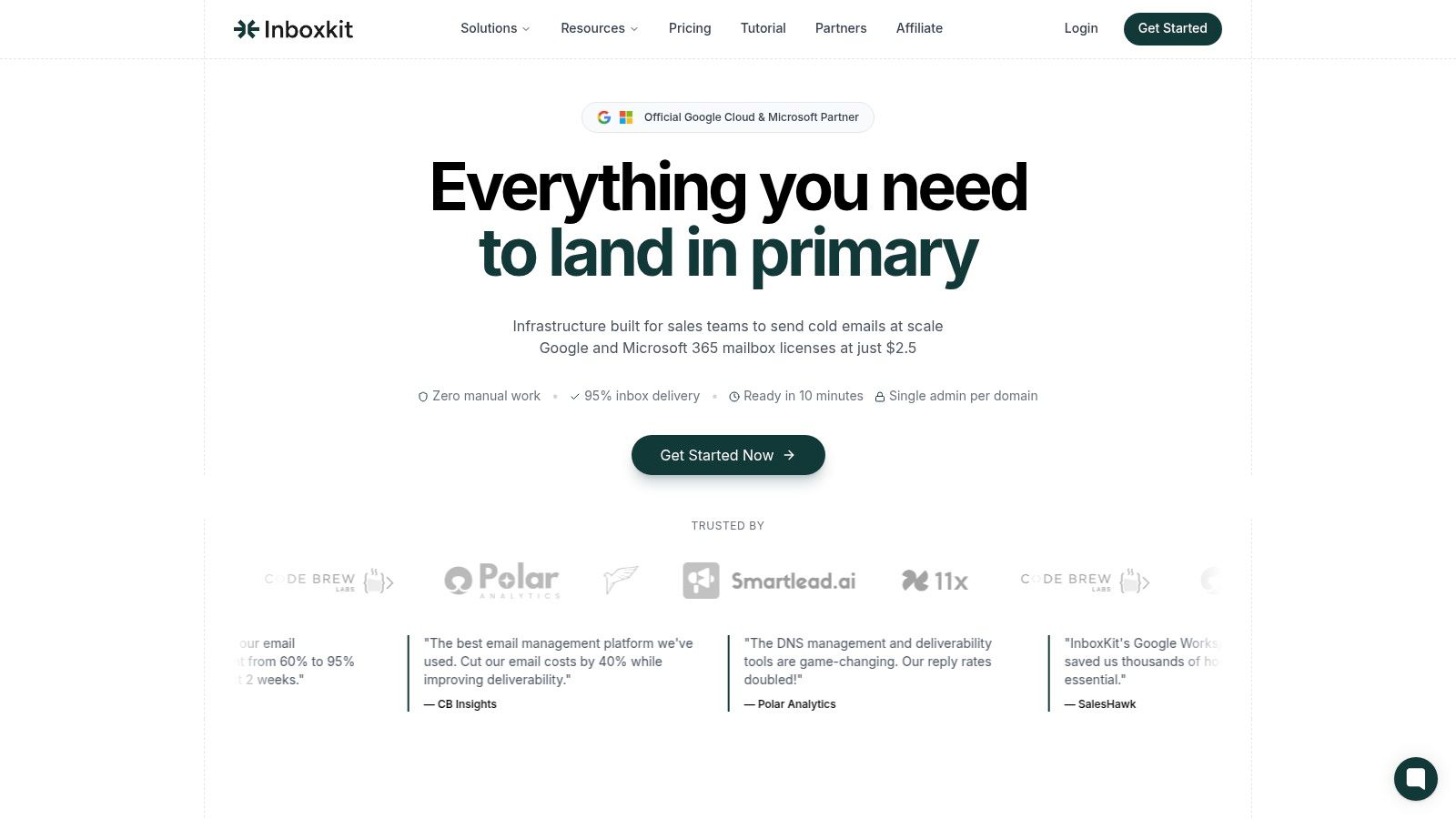
InboxKit’s architecture is purpose-built for high-volume, multi-domain outreach strategies common in agencies and enterprise sales teams. Its domain isolation feature is a standout, providing each domain with its own dedicated control panel. This prevents a reputation issue on one domain from impacting others, a crucial safeguard for agencies managing multiple client campaigns. This structure is frequently praised in online communities like Reddit's r/sales, where users discuss the necessity of rotating domains to maintain high deliverability.
The platform also has built-in guardrails based on proven cold email best practices. It enforces a 14-day minimum warmup, recommends a maximum of three mailboxes per domain, and guides users to maintain a conservative sending volume of 10-15 emails per mailbox daily. While these limits may seem restrictive, they are designed to achieve the advertised ~95% inbox placement rate by mimicking human behavior and avoiding spam triggers.
Key Features:
InboxKit is best suited for B2B sales teams, RevOps managers, and lead generation agencies that prioritize predictable deliverability over sheer, immediate volume. It serves as the foundational layer of your cold email stack; you still need a separate sending tool or sequencer to manage campaigns.
Practical Tip: To maximize success, purchase new domains specifically for outreach and allow 24-48 hours for DNS propagation before connecting them to InboxKit. This “aging” period is a crucial first step in building a positive sender reputation.
| Plan | Monthly Price | Mailbox Slots | Key Feature |
|---|---|---|---|
| Professional | $39 | 10 | Ideal for small teams and startups |
| Agency | $99 | 30 | Built for agencies managing clients |
| Enterprise | $299 | 100 | Full API access and unlimited users |
Note: Add-on mailboxes range from $2.50 to $3.50 depending on the plan, with the lowest price available on the Enterprise Annual plan.
Pros:
Cons:
Twilio SendGrid is one of the most established email delivery services, widely known for its powerful Email API and SMTP relay. While its marketing materials often highlight transactional emails, its robust infrastructure makes it a strong contender for high-volume, programmatic cold email campaigns when managed correctly. It serves as a reliable backbone for developers and RevOps teams building a custom sending stack.
The platform's primary strength lies in its scalability and mature ecosystem. Developers benefit from extensive documentation and SDKs, while operations managers appreciate the detailed analytics, deliverability dashboards, and subuser management features. These tools are crucial for agencies managing multiple client domains, allowing for segmented sending and isolated reputation monitoring.
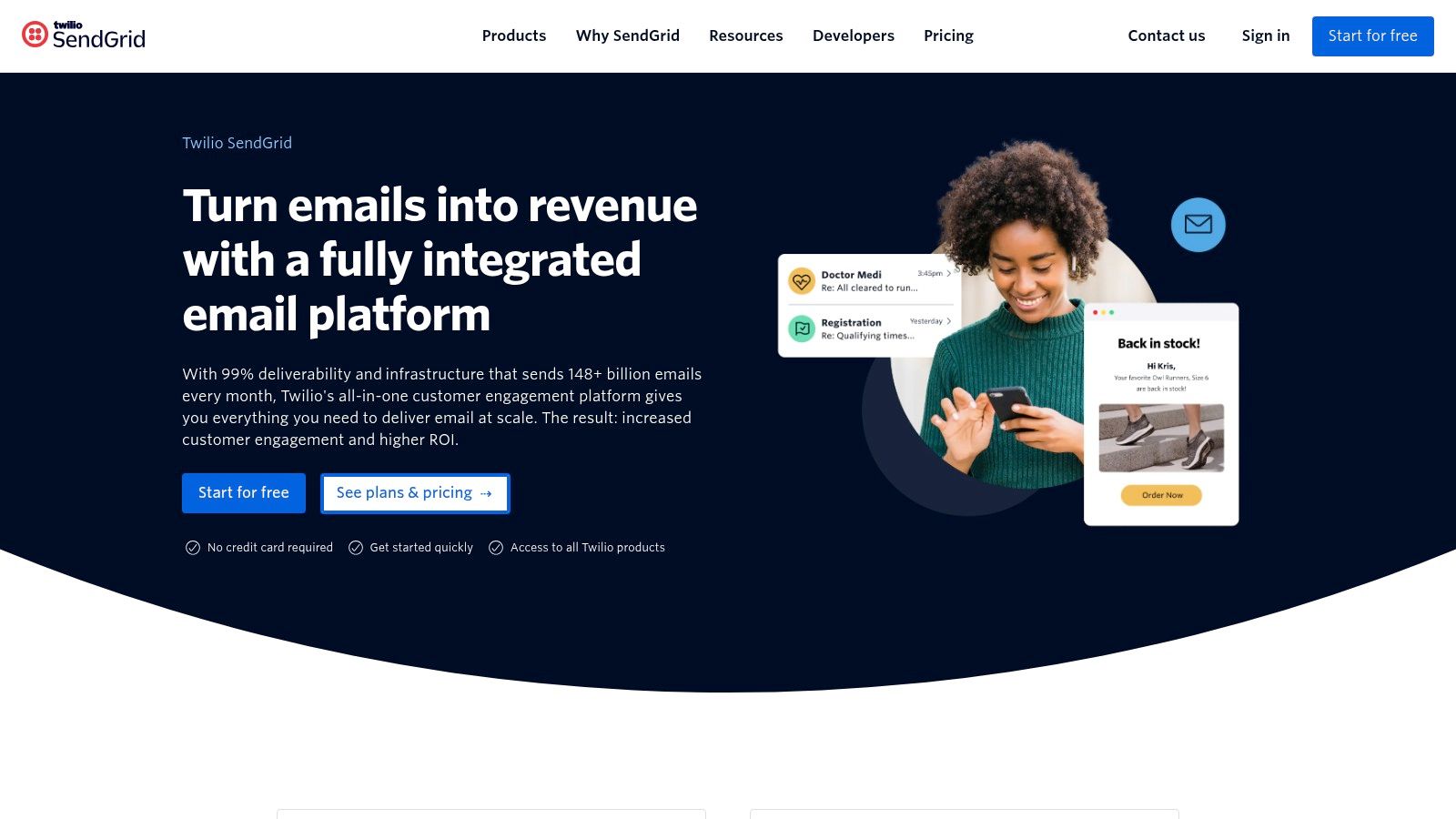
SendGrid excels at providing the raw power needed for scaled outreach. Unlike all-in-one solutions, it gives you the engine, but you are responsible for the "driver" (your sending logic and compliance).
However, SendGrid is not purpose-built for cold email, a sentiment echoed on Reddit where users in r/coldemail often debate its strict anti-spam policies. Aggressive outreach can lead to quick account suspension. For example, a user might find their account flagged after a campaign exceeds an undocumented bounce rate threshold. The platform requires careful, slow scaling and meticulous list hygiene to avoid these pitfalls, making it better for programmatic, high-value outreach rather than mass B2B prospecting.
Website: https://sendgrid.com
Amazon Simple Email Service (SES) is a cloud-based email sending service designed to help digital marketers and application developers send marketing, notification, and transactional emails. For cold outreach, it offers an incredibly low-cost SMTP and API backbone, making it a go-to choice for cost-sensitive, high-volume infrastructure stacks. Its deep integration with the AWS ecosystem provides unmatched reliability and scalability for technical teams.
The platform is fundamentally a utility, providing the raw sending power of AWS without the user-friendly dashboards common in marketing-focused ESPs. This "DIY" nature means the user is responsible for reputation management, warmup, and policy enforcement. However, this also gives advanced users granular control over their sending environment, a critical feature when building one of the best cold email infrastructure tools from the ground up.
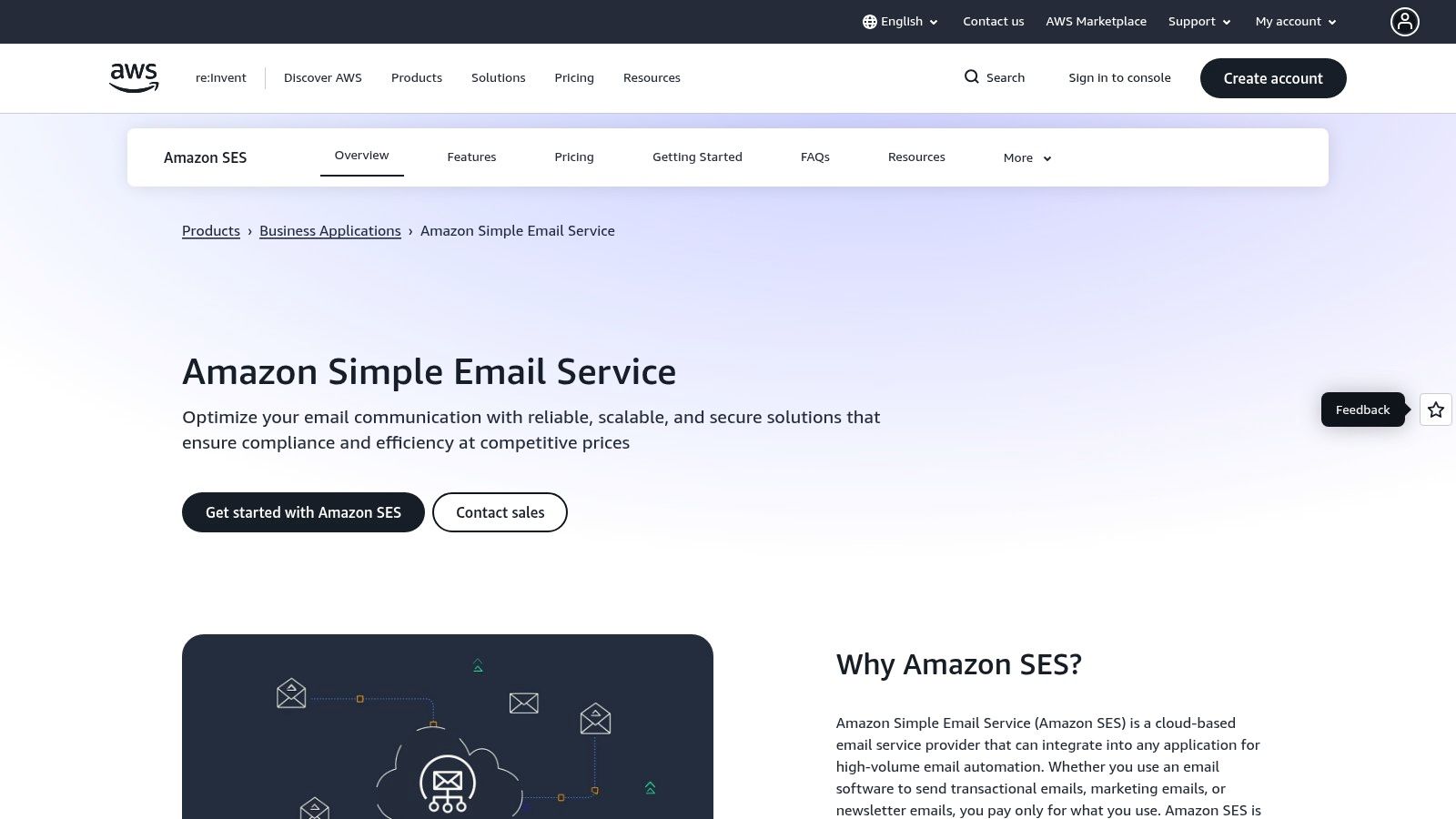
SES shines for its cost-effectiveness and raw power, but it requires a higher degree of technical management. As many Reddit threads in developer communities confirm, getting out of the SES "sandbox" requires a detailed application, and maintaining a low bounce and complaint rate (<0.1%) is non-negotiable.
The primary drawback is its utilitarian interface and the steep learning curve. For instance, a practical setup involves rotating dedicated IPs across different campaigns using custom scripts, a task far beyond the scope of a typical sales team. For developers and RevOps teams comfortable within the AWS environment, SES is a powerful and economical choice. For those seeking a managed solution, the operational overhead might be too high.
Website: https://aws.amazon.com/ses
Mailgun by Sinch is a developer-centric email delivery platform that provides a powerful SMTP relay and REST API for high-volume sending. While it serves a broad range of email needs, its robust infrastructure and granular controls make it a favorite among technical teams building custom cold email systems. It is engineered for reliability, offering the core components needed to manage and scale multi-domain outreach campaigns effectively.
The platform distinguishes itself with a clear focus on the technical user, providing extensive API documentation, webhooks for real-time event tracking, and inbound routing capabilities. For operations managers and developers, this means greater control over their sending logic and deliverability. The optional "Optimize" add-on suite further enhances its utility, bundling tools like inbox placement tests and blocklist monitoring directly within the platform.
Mailgun provides the essential sending engine and deliverability tools, making it one of the best cold email infrastructure tools for teams that value API-driven control and integrated monitoring. You get the raw sending power, but the responsibility for campaign logic and compliance remains yours.
Similar to SendGrid, Mailgun is not explicitly designed for cold outreach and enforces strict sending policies. A common point of discussion in forums is the manual review process for new accounts, which can be a bottleneck. A practical example of a challenge is when a user's sending is throttled automatically after a small spike in bounces from an unverified list, requiring a support ticket to resolve. This highlights the need for impeccable list hygiene and a very gradual sending ramp-up.
Website: https://www.mailgun.com
Postmark, now part of ActiveCampaign, has carved out a niche as a premium transactional email service provider with an almost obsessive focus on deliverability and speed. While its core business is application-driven emails like password resets and receipts, its high-quality infrastructure and meticulously curated shared IP pools make it a viable, albeit unconventional, choice for certain types of cold email. It's best suited for programmatic, low-volume, high-value outreach where inbox placement is non-negotiable.
The platform's strength is its simplicity and reliability; it prioritizes getting critical emails to the inbox over offering a broad suite of marketing features. For developers building a custom sending solution, Postmark’s API is well-documented and easy to implement. Its clean interface and detailed activity logs allow for quick diagnostics, showing exactly what happened to every email sent. This makes it a great foundational layer for teams who want to "set it and forget it" for their core email sending.
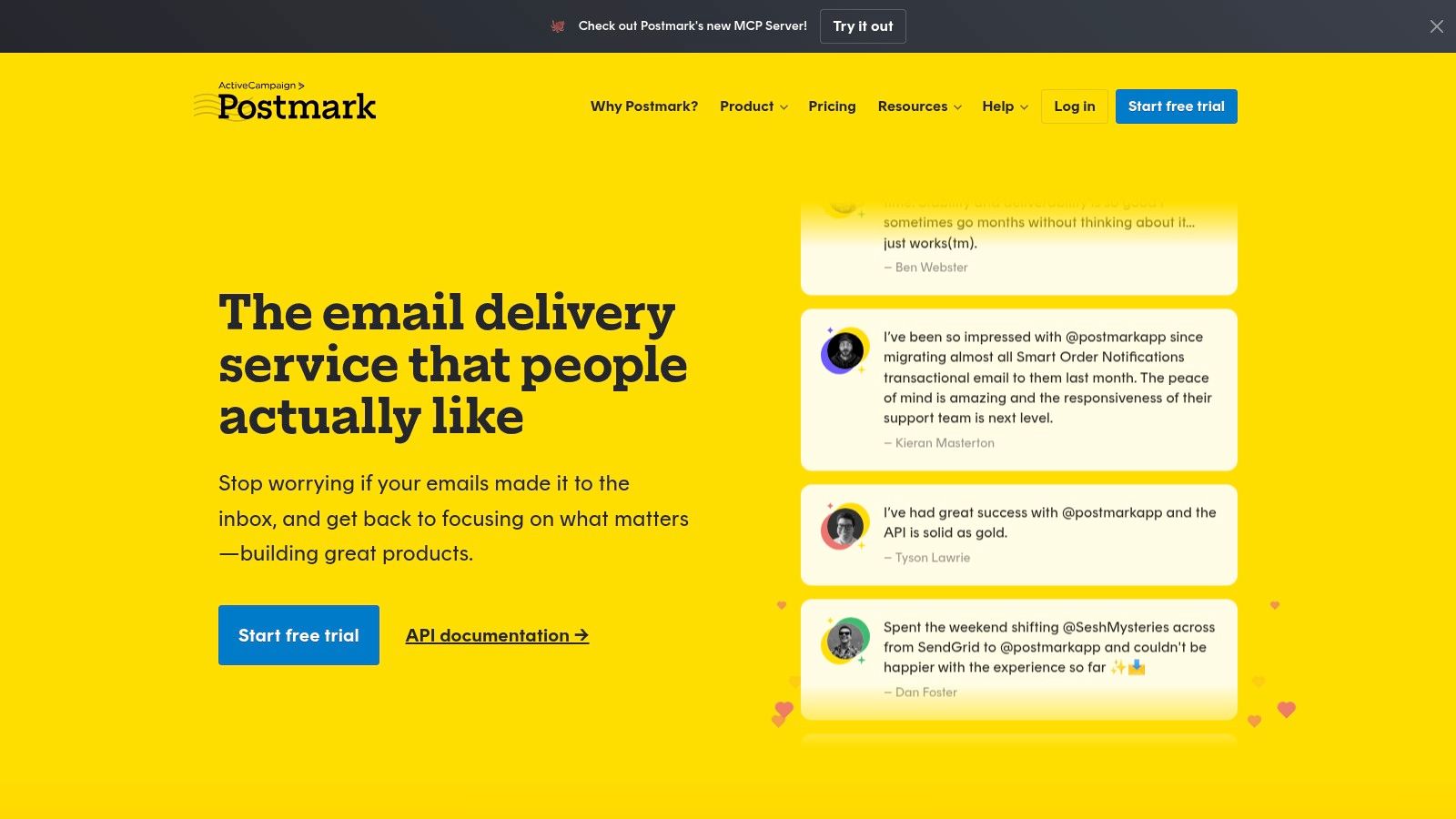
Postmark’s philosophy is quality over quantity, which presents both advantages and limitations for cold outreach. It forces a more disciplined approach to sending, which can lead to better long-term deliverability.
However, its strict policies are a significant hurdle for most cold email campaigns. As users on Reddit often warn, Postmark's team actively discourages traditional cold outreach. A typical failure scenario involves an account being suspended after the first manual review if the content is identified as unsolicited marketing. It's only viable for hyper-personalized, one-to-one style messages sent programmatically, not for scaled prospecting.
Website: https://postmarkapp.com
Brevo, formerly known as Sendinblue, offers a comprehensive marketing and sales platform that includes a reliable transactional SMTP relay. While primarily positioned as an all-in-one marketing solution, its infrastructure is well-suited for organizations that want to consolidate their marketing automation and programmatic cold email sending under a single vendor. This approach simplifies billing and technical management, making it a pragmatic choice for teams without dedicated RevOps resources.
The platform's key advantage is its unified ecosystem. You can manage traditional email campaigns, transactional sends, and even SMS or chat from one dashboard. For teams building a foundational outreach stack, Brevo provides a less intimidating entry point than developer-centric APIs, offering a balance between user-friendliness and powerful SMTP/API capabilities. Its broad plugin support for CMS and e-commerce platforms also simplifies integration.
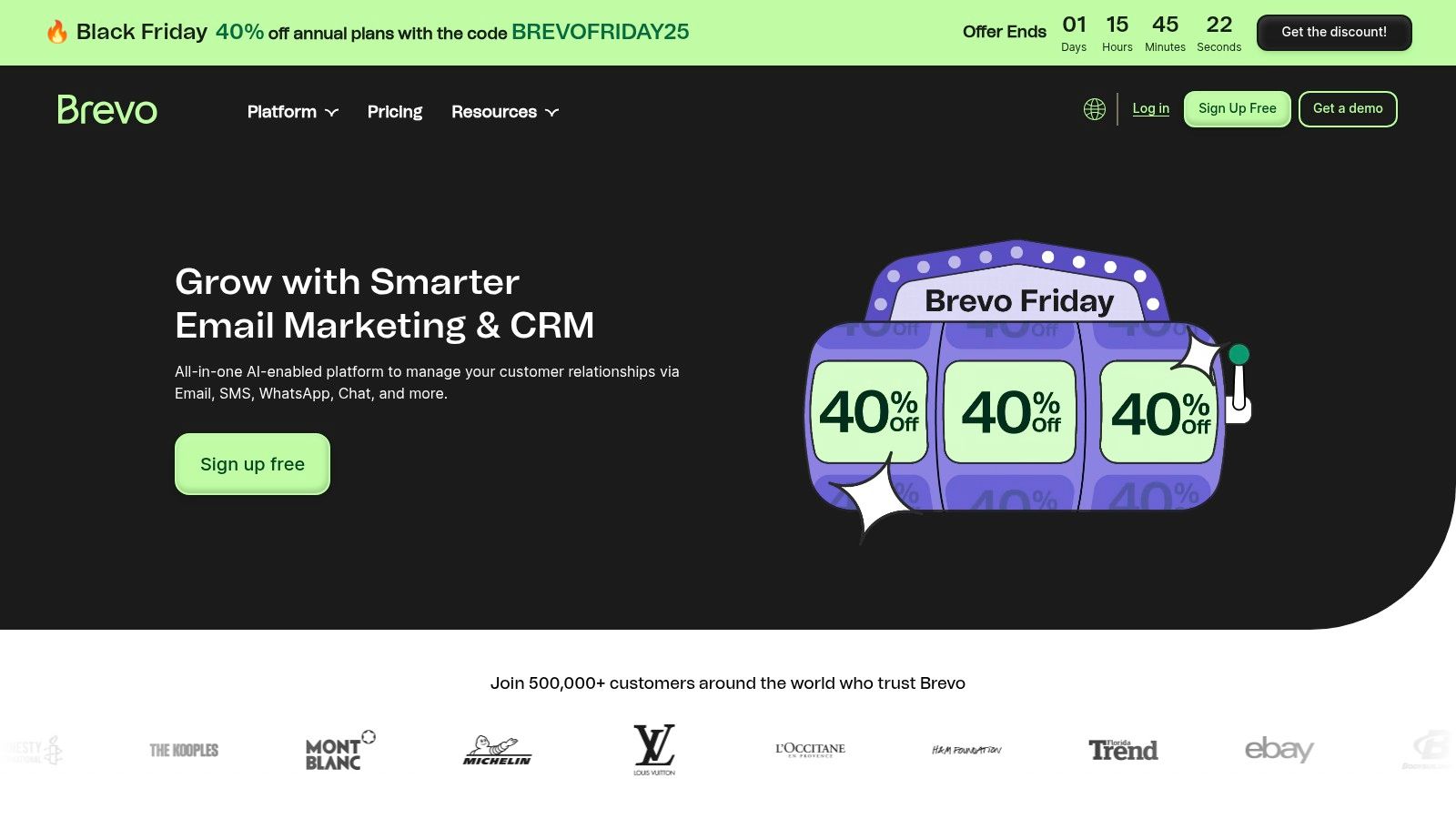
Brevo excels by bundling marketing and transactional tools, which can be cost-effective for smaller teams. It provides the necessary infrastructure for cold outreach while also supporting broader communication goals, making it one of the more versatile cold email infrastructure tools.
A practical insight from user discussions is that while Brevo's SMTP is reliable, its shared IP pools are mixed-use, serving both marketing and transactional senders. This can expose a cold emailer to reputation risks from other users on the platform. A common workaround discussed is purchasing a dedicated IP, but this requires a consistent sending volume and a manual warm-up process, which adds complexity for those new to cold outreach.
Website: https://www.brevo.com
MailerSend positions itself as a developer-first transactional email service, but its simplicity, transparent pricing, and robust API make it a compelling option for building a lean cold email infrastructure. It provides the essential sending engine via SMTP and API without the complexity of larger platforms, making it ideal for startups and technical teams that need to get operational quickly. The platform focuses on core functionality, delivering reliable sending capabilities with a straightforward user experience.
Its strength lies in its accessibility and ease of integration. With well-documented SDKs and a clean API, developers can connect their sending applications in minutes, not hours. For RevOps teams, the platform offers features like inbound routing and webhooks, which are useful for automating responses or processing replies from cold outreach campaigns. This focus on fundamentals makes it one of the best cold email infrastructure tools for teams that value speed and efficiency over an exhaustive feature set.
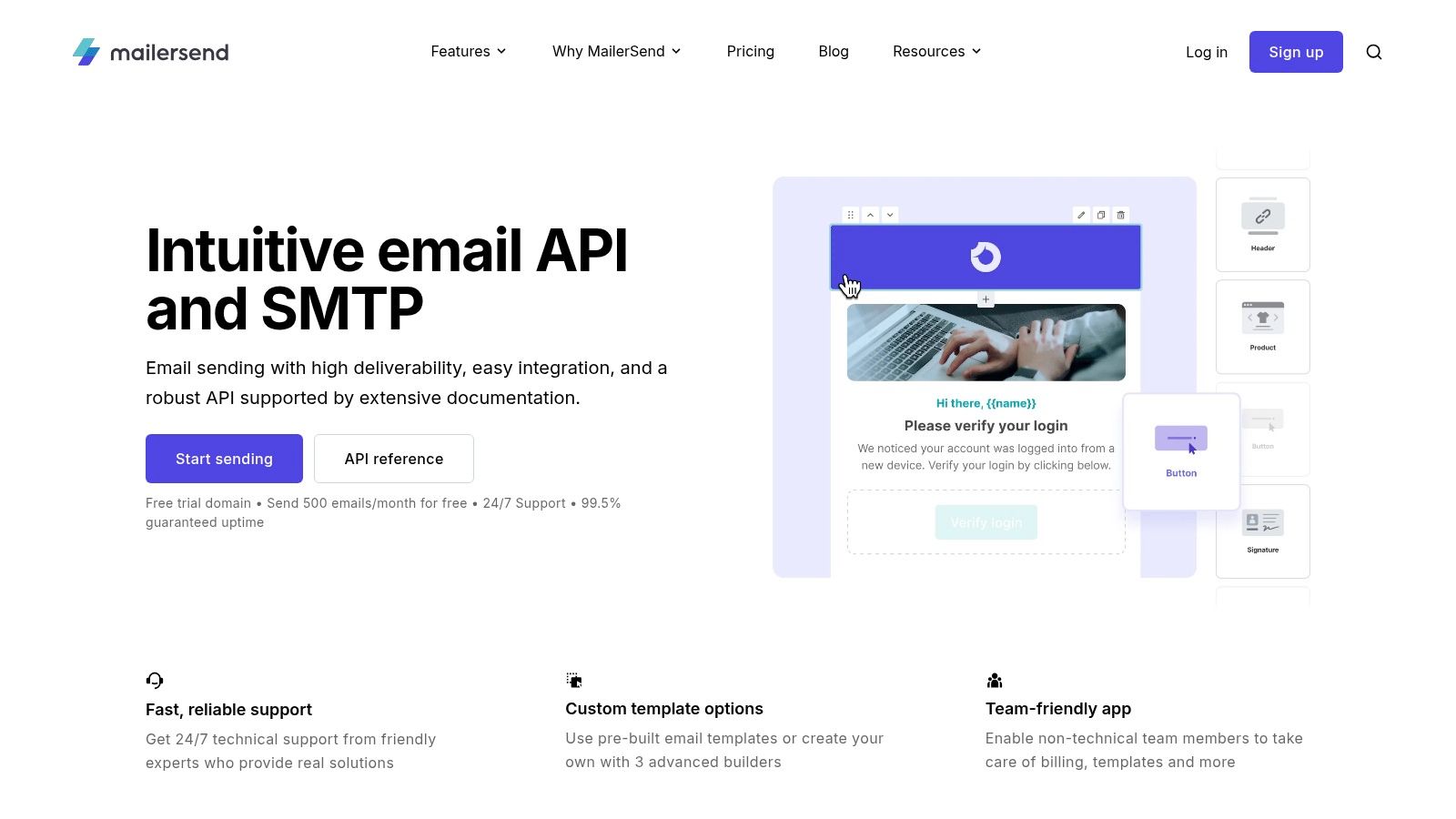
MailerSend provides a no-frills, reliable sending layer that is easy to manage. Its transparent plans, including a generous free tier, allow teams to start small and scale their outreach without a significant upfront investment.
A significant consideration is that dedicated IP addresses are reserved for enterprise or very high-volume senders, meaning most users will be on shared IPs. As a practical matter, this means your sender reputation is partially tied to other MailerSend customers. User feedback suggests that while their compliance team is reasonable, the shared environment makes it less suitable for aggressive, high-volume cold campaigns compared to using isolated mailboxes from Google or Microsoft.
Website: https://www.mailersend.com
ZeroBounce is an indispensable email hygiene and deliverability toolkit, acting as a crucial pre-flight check before launching any cold outreach campaign. Its primary function is to clean and validate email lists, drastically reducing bounce rates that can quickly damage sender reputation. For anyone serious about scaling outreach, integrating an email verification service like this is non-negotiable, as it provides the first line of defense against sending to invalid addresses.
The platform goes beyond simple verification, offering a suite of deliverability tools that help diagnose and monitor campaign health. This includes blacklist monitoring, inbox placement testing, and DMARC monitoring. These features allow RevOps teams and agencies to proactively manage their sending infrastructure, ensuring emails aren't just sent but are actually reaching the primary inbox. Its value lies in preventing deliverability problems before they start, making it a foundational component of a robust cold email stack.
ZeroBounce is less about sending and more about ensuring what you send has the best possible chance of landing. It’s a specialized tool for maintaining the health of your most critical assets: your sending domains and your lead lists.
A practical tip often shared on Reddit is to avoid sending to "catch-all" emails identified by ZeroBounce, even though they are technically deliverable. These addresses often have low engagement and can sometimes be spam traps, making them risky for cold outreach. Focusing only on "valid" results is a safer strategy for protecting sender reputation.
Website: https://www.zerobounce.net
Kickbox is an email verification service that plays a critical role in maintaining high sender reputation by ensuring lead lists are clean before campaigns are launched. Its primary function is to prevent hard bounces, which are a major red flag for mailbox providers. For teams building a robust cold email infrastructure, integrating a verification tool like Kickbox is a non-negotiable step to protect domain health and improve inbox placement rates.
The platform distinguishes itself with a developer-friendly API and a simple, pay-as-you-go pricing model that is easy to understand and implement. This makes it accessible for both startups testing their first campaigns and agencies needing to validate large client lists. Its real-time verification API can be integrated directly into lead capture forms or CRM workflows, ensuring new contacts are validated on the fly.
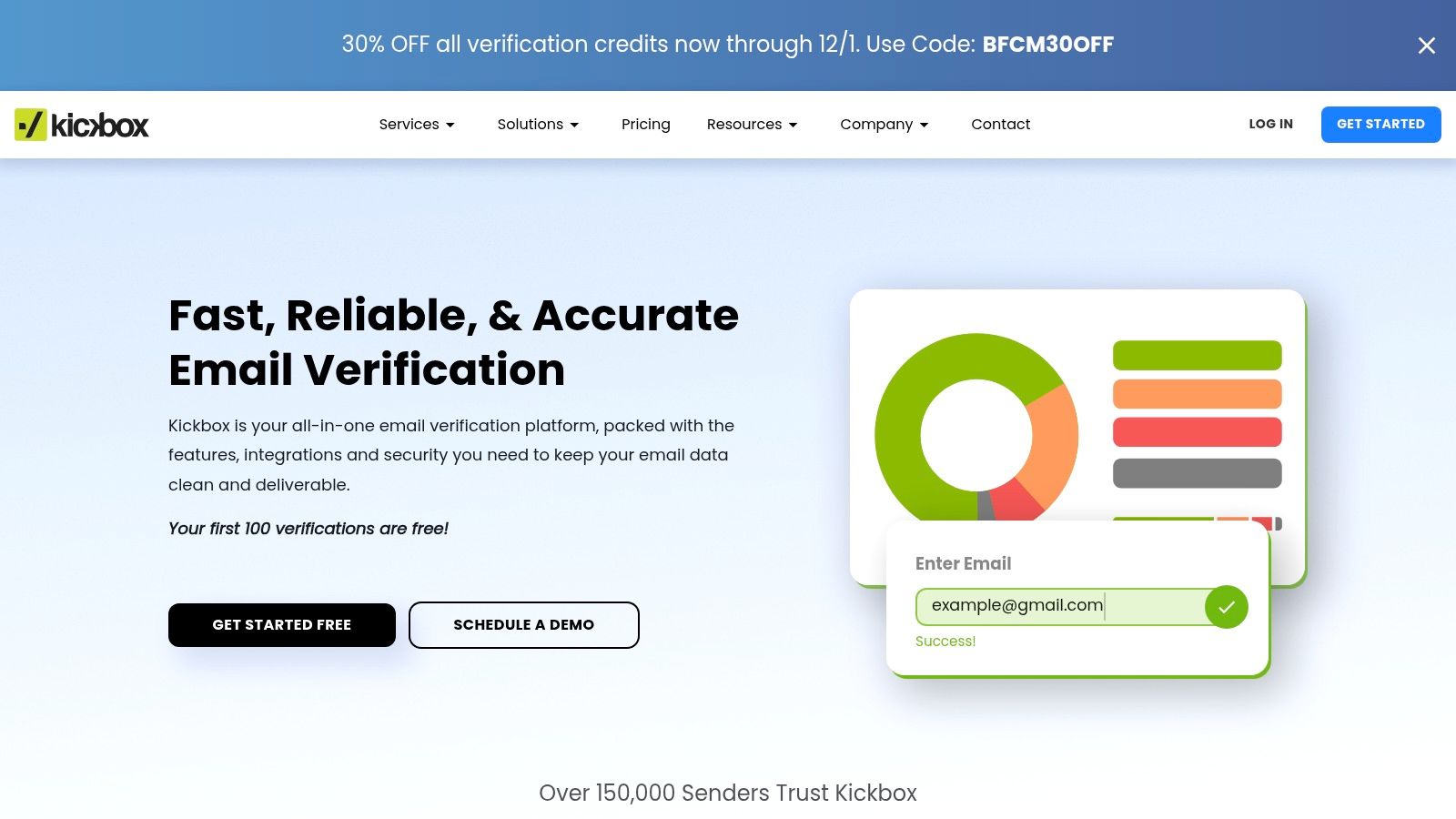
Kickbox excels at one thing: accurate, real-time email verification. This focus makes it a specialized, yet essential, component in any collection of the best cold email infrastructure tools, rather than a jack-of-all-trades platform.
A practical insight from users is that while Kickbox is excellent, no verification tool is 100% perfect. A common strategy discussed online is to use two different verification services for very large or expensive lead lists. If both services agree an email is "valid," the confidence level is much higher. This redundancy, while adding cost, can be a valuable risk-mitigation tactic for high-stakes campaigns.
Website: https://kickbox.com
GlockApps is not a sending provider but a specialized deliverability testing suite. Instead of sending your emails, it tells you where they will land before you launch a large-scale campaign. By sending a test email to its global seed list, you can see if your messages are hitting the inbox, spam folder, or getting blocked across major providers like Google Workspace and Microsoft 365. This diagnostic power makes it an essential pre-flight check for any serious cold outreach operation.
The platform's core value lies in its proactive, data-driven approach to inbox placement. For RevOps managers and agencies, it provides concrete evidence of deliverability issues, moving beyond guesswork. You can test different subject lines, track domain reputation, and monitor DMARC compliance, all within a single interface. This allows you to pinpoint the exact cause of a problem, whether it's a technical misconfiguration or poor copy, before your sender reputation is damaged.
GlockApps acts as your deliverability consultant, providing the diagnostics needed to maintain a healthy sending infrastructure. It’s a tool for fine-tuning your setup, not for raw sending volume itself.
A practical use case frequently discussed in cold email communities is using GlockApps to A/B test email copy for spam triggers. For example, a user might send two versions of an email—one with a link and one without—to the seed list. If the version with the link consistently lands in spam, it's a strong indicator that the link's domain has a poor reputation, a fixable problem that would have otherwise crippled a live campaign. For more on this topic, you can learn more about improving email deliverability.
Website: https://glockapps.com
Instantly has rapidly become a dominant all-in-one platform for scaled cold email outreach, combining infrastructure management with campaign execution. It is designed for agencies and sales teams that need to connect and manage hundreds or even thousands of email accounts simultaneously. The platform’s core value proposition is simplifying high-volume sending through unlimited account connections and automated warmup.
Its infrastructure is built around multi-inbox rotation, which automatically distributes sending volume across all connected accounts to protect individual domain reputations. This approach, combined with a centralized "Unibox" for managing replies, streamlines what would otherwise be a chaotic process. For teams managing multiple client campaigns or extensive internal outreach, Instantly offers a cohesive environment that blends sender management with practical campaign tools like A/B testing and analytics.
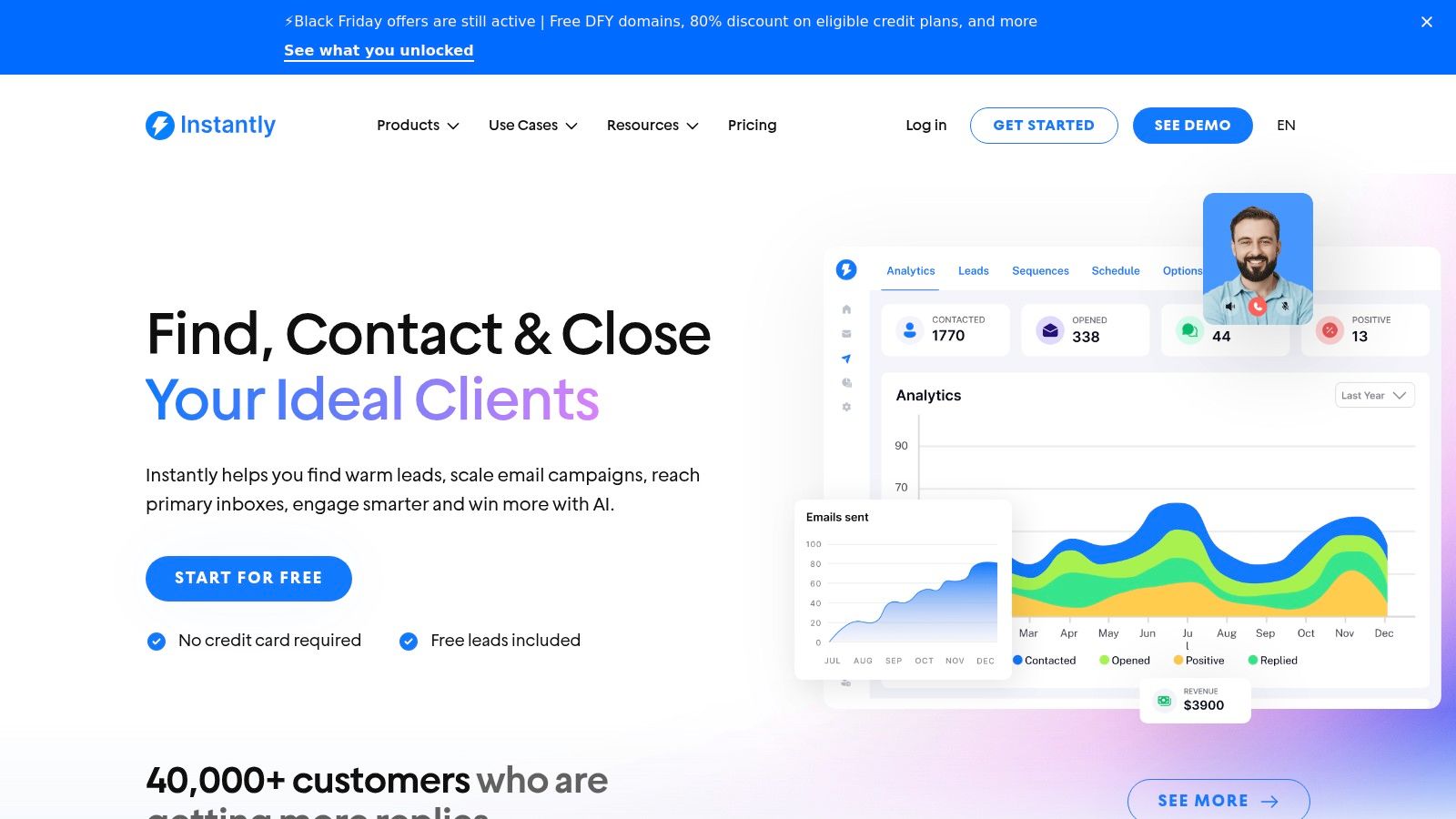
Instantly excels by packaging complex infrastructure needs like account rotation and warming into a user-friendly interface. It abstracts away much of the manual setup, making it one of the best cold email infrastructure tools for teams focused on speed and scale.
A practical insight from Reddit's r/coldemail community is that while Instantly's unlimited accounts feature is powerful, success depends on the quality of the mailboxes you connect. Connecting cheap, low-reputation mailboxes will still result in poor deliverability. The most successful users pair Instantly with a high-quality infrastructure provider for their mailboxes, using Instantly as the campaign execution layer rather than an all-in-one solution.
Website: https://instantly.ai
Smartlead is a cold email automation platform built specifically for high-volume outreach, making it a favorite among lead generation agencies and sales teams managing extensive sending infrastructures. It distinguishes itself by offering unlimited email account connections, dynamic IP/inbox rotation, and a centralized Master Inbox, all designed to maximize deliverability and streamline campaign management at scale. This approach positions it as more than just a sending tool; it's a comprehensive command center for large-scale cold email operations.
The platform's core value proposition is enabling users to send from a vast pool of inboxes as if they were one, automatically rotating senders to protect domain reputation and improve inbox placement. This native rotation is a significant infrastructure advantage over tools that require complex third-party setups to achieve similar results. For agencies managing campaigns for multiple clients, this simplifies one of the most technically demanding aspects of cold outreach.
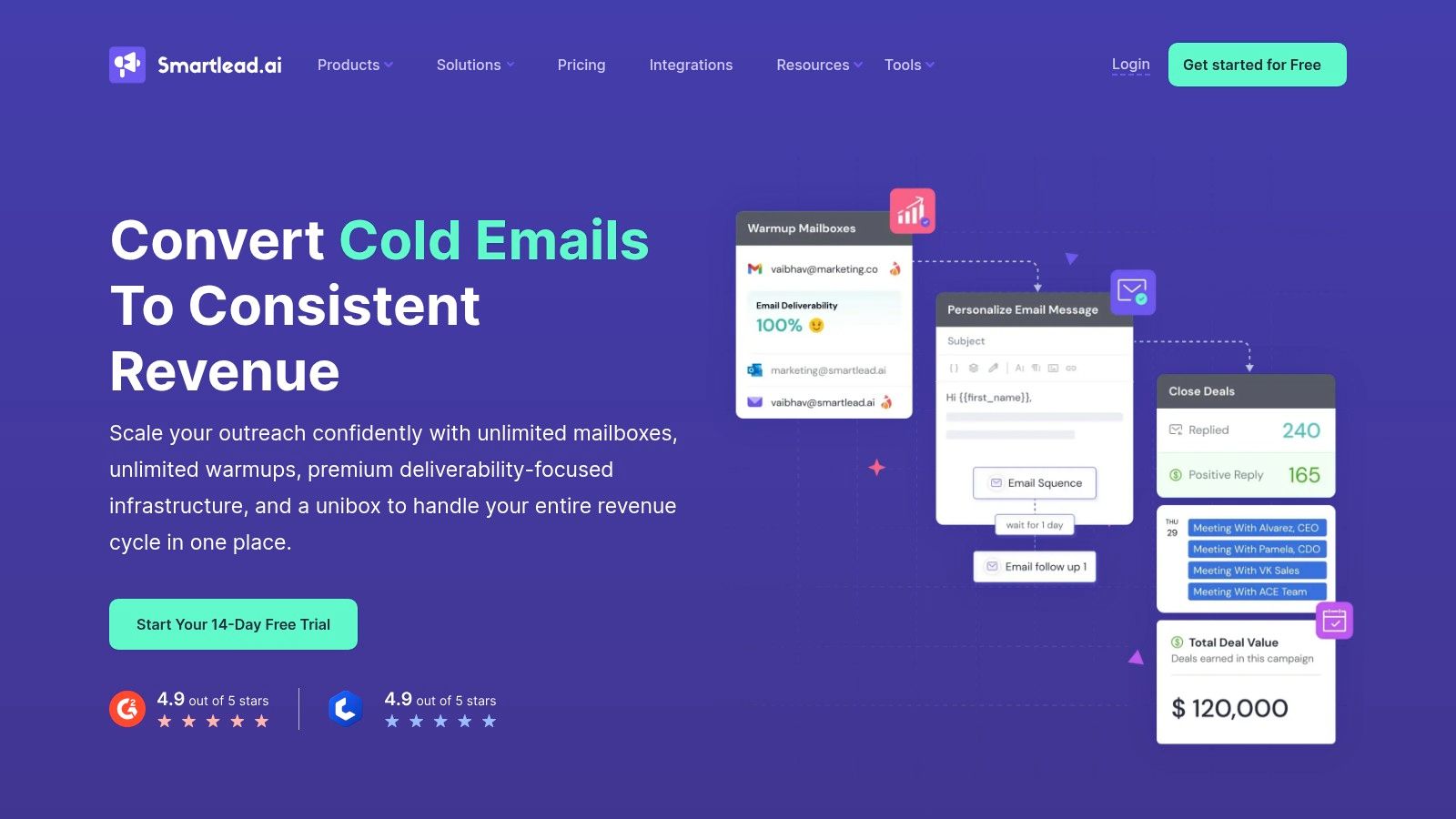
Smartlead excels at abstracting away the complexity of multi-domain sending while providing powerful tools for optimization. It's built for users who need to scale volume without sacrificing the granular control necessary for deliverability.
A valuable fact shared by experienced users is that Smartlead's AI-powered warmup feature is particularly effective because it generates human-like, multi-threaded conversations, which appears more natural to spam filters than simple one-off warmup emails. However, as with any sending platform, users must ensure their domain's DNS records (SPF, DKIM, DMARC) are perfectly configured before connecting accounts to Smartlead to reap the full benefits of its deliverability features.
Website: https://www.smartlead.ai
| Product | Core features | Quality & deliverability ★ | Price / Value 💰 | Target audience 👥 | Unique features ✨ |
|---|---|---|---|---|---|
| 🏆 InboxKit | Official Google Workspace & Microsoft 365 mailboxes; automated SPF/DKIM/DMARC; fresh domains; bulk CSV mailbox creation | ★★★★★ — ~95% inbox placement claimed. 14‑day warmup. Recommended: 3 mailboxes/domain max; 10–15 sends/mailbox/day after warmup. Warmup ramp: Days1–3:5/day; Days4–7:10/day; Week2:15–20/day. Keep bounce <5%, spam <0.1% | 💰 Plans: $39 / $99 / $299 mo. Annual: $372 / $972 / $3,000. Add‑ons $2.50–$3.50/mailbox. Domains ~$10–$15/yr | 👥 Cold‑email agencies, B2B sales, lead‑gen, SDR/BDR, RevOps | ✨ Domain isolation per control panel; US IP allocation; 10‑min setup; full API & webhooks; reputation auto‑pause |
| Twilio SendGrid | Email API & SMTP relay; analytics; subuser & webhook support | ★★★★☆ — Strong deliverability dashboards and tooling | 💰 Tiered (Essentials/Pro/Premier); 60‑day trial; overages possible | 👥 Developers, apps needing transactional/programmatic send | ✨ Mature ecosystem, wide integrations & docs |
| Amazon SES | Pay‑as‑you‑go SMTP/API; dedicated IPs & BYOIP; inbound processing | ★★★☆☆ — Low unit cost; deliverability depends on user reputation mgmt | 💰 Very low cost per email; pay‑as‑you‑go | 👥 Cost‑sensitive teams, AWS‑centric infra | ✨ BYOIP, deep AWS service integration |
| Mailgun | SMTP/API, inbound routing, templates; Optimize add‑on for tests & monitoring | ★★★★☆ — Strong dev tooling and deliverability add‑ons | 💰 Tiered pricing; dedicated IPs extra | 👥 Technical teams running multi‑domain outreach | ✨ Inbox placement tests, validation & monitoring add‑ons |
| Postmark (by ActiveCampaign) | Transactional SMTP/API, inbound processing, detailed delivery reporting | ★★★★☆ — Fast, reliable transactional delivery | 💰 Transparent pricing; free dev tier; dedicated IPs at very high volume | 👥 System emails, apps needing reliable transactional delivery | ✨ Provider‑managed shared IP pools; speed & transparency |
| Brevo (Sendinblue) | Transactional SMTP/API + marketing automation, CMS/e‑com plugins | ★★★☆☆ — Good reporting; combined marketing/transactional insights | 💰 All‑in‑one vendor pricing (marketing + transactional) | 👥 SMBs wanting single vendor for campaigns & transactions | ✨ Unified marketing + transactional toolset |
| MailerSend | SMTP/API, templates, inbound routing, SDKs | ★★★☆☆ — Lightweight, developer‑friendly | 💰 Free starter tier; clear paid plans; dedicated IPs for enterprise | 👥 Developers, startups, small apps | ✨ Simple plans, fast SDK onboarding |
| ZeroBounce | Email verification, inbox tests, blacklist & DMARC monitoring | ★★★★☆ — Improves deliverability via hygiene & testing | 💰 Pay‑as‑you‑go credits; bundled deliverability tools | 👥 List hygiene teams, deliverability specialists | ✨ Non‑expiring credits; accuracy guarantees |
| Kickbox | Batch & real‑time verification API; CRM/ESP integrations | ★★★★☆ — Reliable verification with easy API | 💰 Pay‑as‑you‑go; clear tiers; 100 free credits trial | 👥 Marketers & devs validating leads before sends | ✨ Simple onboarding; broad integrations |
| GlockApps | Seed‑list inbox placement tests, DMARC & reputation monitoring | ★★★★☆ — Deep deliverability diagnostics | 💰 Credit packs & monthly plans for testing | 👥 Deliverability engineers, agencies | ✨ Seed‑list testing + DMARC/IP reputation analytics |
| Instantly | Multi‑inbox rotation, unlimited accounts, sequences, warmup & Master Inbox | ★★★★☆ — High sending when warmed; built‑in warmup & analytics | 💰 Agency‑friendly, modular add‑ons | 👥 Agencies & high‑volume outreach teams | ✨ Master Inbox for replies; integrated warmup & rotation |
| Smartlead | Multi‑domain/multi‑inbox automation, dynamic IP rotation, master inbox | ★★★★☆ — Scales for agencies but requires best practices | 💰 Competitive for high volume; unlimited accounts | 👥 Agencies, high‑volume outreach teams | ✨ Dynamic IP rotation; unlimited accounts & API/webhooks |
Navigating the landscape of cold email infrastructure can feel like assembling a complex engine from scratch. We've explored a wide range of solutions, from foundational SMTP providers like Amazon SES and Mailgun to specialized, all-in-one platforms like InboxKit, and campaign management tools such as Instantly and Smartlead. The central theme that emerges isn't about finding a single "best" tool, but about architecting a resilient, modular stack that aligns with your specific operational needs, scale, and technical expertise.
The most critical takeaway is the strategic separation of your foundational assets (domains and mailboxes) from your campaign execution layer (sending software). Relying on a single platform for both can create a single point of failure. When a sending tool gets flagged or its IP pools are degraded, your entire infrastructure, including your valuable domains, is at risk. By using a dedicated infrastructure provider to create and manage your official mailboxes and DNS records, you build a stable, protected foundation that can be plugged into any sending tool you choose.
Building a robust cold outreach system requires more than just good software; it demands a strategic approach. Here’s a blueprint to guide your implementation, moving from foundational setup to ongoing optimization.
Your ideal tool combination depends heavily on your team's profile. A solo entrepreneur might lean towards an all-in-one solution for simplicity, while a scaling agency managing multiple clients needs the robust, segregated infrastructure that a dedicated provider offers. Developers and RevOps teams will prioritize API access and deep integration capabilities to build custom workflows.
Remember, the quality of your outreach is only as good as the quality of your leads. To effectively fill your pipeline, exploring methods like web scraping for lead generation can provide valuable contacts. But even the best leads are useless if your emails don't land in the inbox. Ultimately, the best cold email infrastructure tools are the ones that empower you to send a high volume of personalized emails that consistently reach their target, turning cold outreach from a gamble into a predictable revenue channel.
Ready to build a truly scalable and resilient cold email foundation? InboxKit automates the entire infrastructure setup, from creating hundreds of official mailboxes to managing complex DNS records, so you can focus on writing great campaigns. Stop worrying about deliverability and start building a predictable pipeline by visiting InboxKit to learn more.
Discover imap settings for google and learn how to configure Gmail and Google Workspace for outreach, boosting deliverability and replies.
Read articleExplore b2b email marketing best practices with practical tips to boost open rates, engagement, and conversions in 2025.
Read articleDiscover the best cold email software for deliverability and scale. We compare 12 top tools with real-world insights for agencies and B2B sales teams.
Read articleInboxKit provides everything you need to reach the inbox consistently