Case StudiesCase Study
VectifyVectify·B2B sales execution agency (Amsterdam)

Same Spend, Double the Output: How Vectify Scaled Past a Failed Azure Migration

Published on: Sep 9, 2026· 5 min read
534K
Emails sent per week
9.5%
Attributed reply rate
30,201
Mailboxes managed

TL;DR

Vectify had built outbound entirely on Google mailboxes, then failed twice trying to add Azure, once through outside providers and once with self-managed tenants. InboxKit's Azure tenants worked on the first real attempt. The same roughly $5,000 monthly spend now runs more than double the sending volume, with reply rates holding steady.

Google Worked, Azure Didn't, Until It Did

Vectify had been 100% reliant on Google mailboxes for outbound. When they tried to diversify into Azure, the attempt stalled twice, first through outside providers that were difficult to work with, then through an attempt to stand up their own Azure tenants directly. Both paths failed, and the search sat unresolved until the team found InboxKit.

Before InboxKit, we were 100% focused on Google mailboxes. We tried Azure with a few providers that weren't easy to work with, and we tried setting up our own tenants, and it all failed. We just stopped looking until we found InboxKit, and their Azure tenants worked very well.

— Floris Jansen, Founder of Vectify

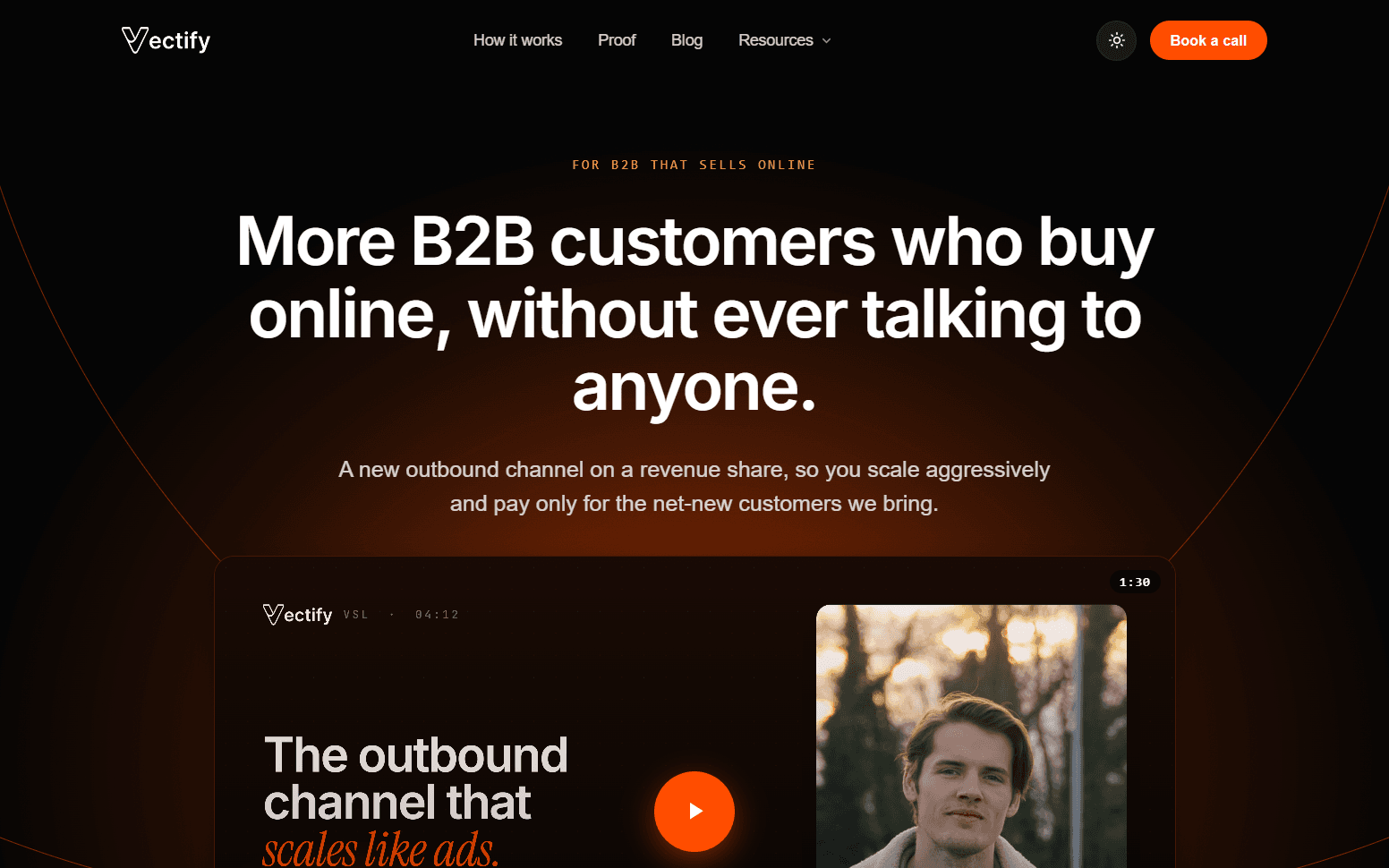
Vectify homepage — a new outbound channel for B2B companies that sell online, priced on revenue share
Vectify runs outbound as a channel for B2B companies, combining AI, data enrichment, and sending infrastructure on a revenue-share model.

The Switch: Azure That Actually Works, at the Same Price

What tipped the decision wasn't a single feature, it was the combination of working infrastructure, responsive support, and pricing that didn't require a tradeoff.

Before InboxKit, Vectify was spending close to $5,000 a month on infrastructure. After switching, that number stayed flat, but sending volume more than doubled.

We were looking at a bunch of different inbox providers, even setting up inboxes ourselves. In the end we picked InboxKit because their support was excellent, the mailboxes were set up quickly, and they were just good people to work with. The price was right, the people were right, and we could move fast.

— Floris Jansen, Founder of Vectify

Setup speed mattered too. Test mailboxes were live within days, and the onboarding wizard integrated directly with Vectify's sequencer.

What surprised me most was how easy it was. The wizard setup was awesome, it integrated neatly with our sequencer, and that was amazing.

— Floris Jansen, Founder of Vectify

How Vectify Runs InboxKit

Vectify manages their mailbox infrastructure through a mix of the InboxKit UI and the InboxKit MCP, running 30,201 mailboxes at the time of this interview. The MCP in particular has become load-bearing for their day-to-day operations.

We're running a bit more than 30,000 inboxes at the moment, so decent volume. If the MCP disappeared, that would be a major issue for me, that feature is so useful. Combined with the wizard to set up mailboxes and route them straight into the right sequencer, it's super useful.

— Floris Jansen, Founder of Vectify

The Result: Output Doubled, Reply Rates Held

The headline shift for Vectify was cost efficiency. Mailbox pricing on InboxKit meant their infrastructure spend stayed roughly flat while their output climbed.

Reply rates are typically the tradeoff agencies accept when moving from Google to Azure sending, they tend to drop. Vectify didn't see that drop.

What mainly changed for us is the cost of doing business. The mailboxes are priced competitively, combined with great service, so our cost stayed theoretically the same but our output became much higher, with similar reply rates. Normally reply rates go down switching from Google to Azure. In our case they stayed the same, and with that pricing we were able to more than double what we were doing.

— Floris Jansen, Founder of Vectify

The Moment: A Weekend Fix

One specific incident stood out to Floris as representative of working with the InboxKit team. Mailboxes for a new client were being set up on a Friday, and an issue surfaced the next day while loading them into the sequencer.

I was setting up mailboxes for a new customer on Friday, and on Saturday something went wrong loading them into the sequencer. I messaged the team in Slack, not really expecting anything on a weekend. They were looking at it Saturday, and by Sunday I got a notification it was done. They fixed it for us over the weekend.

— Floris Jansen, Founder of Vectify

Why This Matters

  • Azure infrastructure that actually ships. Vectify had already tried and failed at Azure mailboxes twice before InboxKit, through both third-party providers and a self-managed attempt. Infrastructure that works on the first real try is the difference between diversifying sending infrastructure and staying stuck on a single provider.
  • Cost stays flat while volume scales. Doubling sending volume without doubling spend changes the unit economics of outbound for an agency running client campaigns at Vectify's scale.
  • Reply rates don't pay the tax. A Google-to-Azure move usually costs some reply rate performance. Vectify's stayed level, which means the volume increase was additive rather than a tradeoff.
  • The MCP is now core infrastructure. For a team managing 30,000+ mailboxes, the MCP integration isn't a nice-to-have, Floris named it directly as something whose absence would be a major operational issue.

About Vectify

Vectify is a B2B sales execution agency based in Amsterdam that combines AI, data enrichment, and outbound infrastructure to run cold email programs on behalf of its clients. The team builds targeted lead lists, manages sending infrastructure and warmup, and monitors replies through to handoff, positioning itself as a full outbound engine rather than a single-channel tool.

If you're doubting about using InboxKit, I'd definitely recommend getting in touch with these guys and talking to them. They're great people to work with and their infra is just perfect. The tool itself, the interface, and the MCP are just super useful.

— Floris Jansen, Founder of Vectify, rating InboxKit 9.5/10

Running outbound for clients?

InboxKit provides the Azure and Google mailboxes, domains, automated DNS, warmup, and sequencer integrations that let agencies diversify sending infrastructure without losing reply rates. See plans and pricing or explore our agency email solution.

Sources & References

  1. 1vectify.io faviconVectify(2026)
  2. 2www.inboxkit.com faviconFloris Jansen interview, InboxKit(2026)
  3. 3www.inboxkit.com faviconInboxKit pricing(2026)

Ready to build infrastructure that scales?

Plans from $39/mo with 10 mailboxes included. Automated DNS, warmup, and InfraGuard monitoring included.