
On this page

 vs
vs
InboxKit vs Amazon SES: Managed Cold Mailboxes vs DIY SMTP (2026)
Amazon SES is the cheapest way to send email on the internet, roughly $0.10 per 1,000 emails, and for transactional and high-volume application mail it is outstanding. But for cold outreach it is the wrong tool: AWS gates email use cases at the production-access stage, its acceptable-use policy discourages unsolicited mail, and you assemble and warm everything yourself. InboxKit is the opposite, managed email infrastructure with real Google/Microsoft/Azure mailboxes on dedicated US IPs, warmup, and InfraGuard monitoring built in.
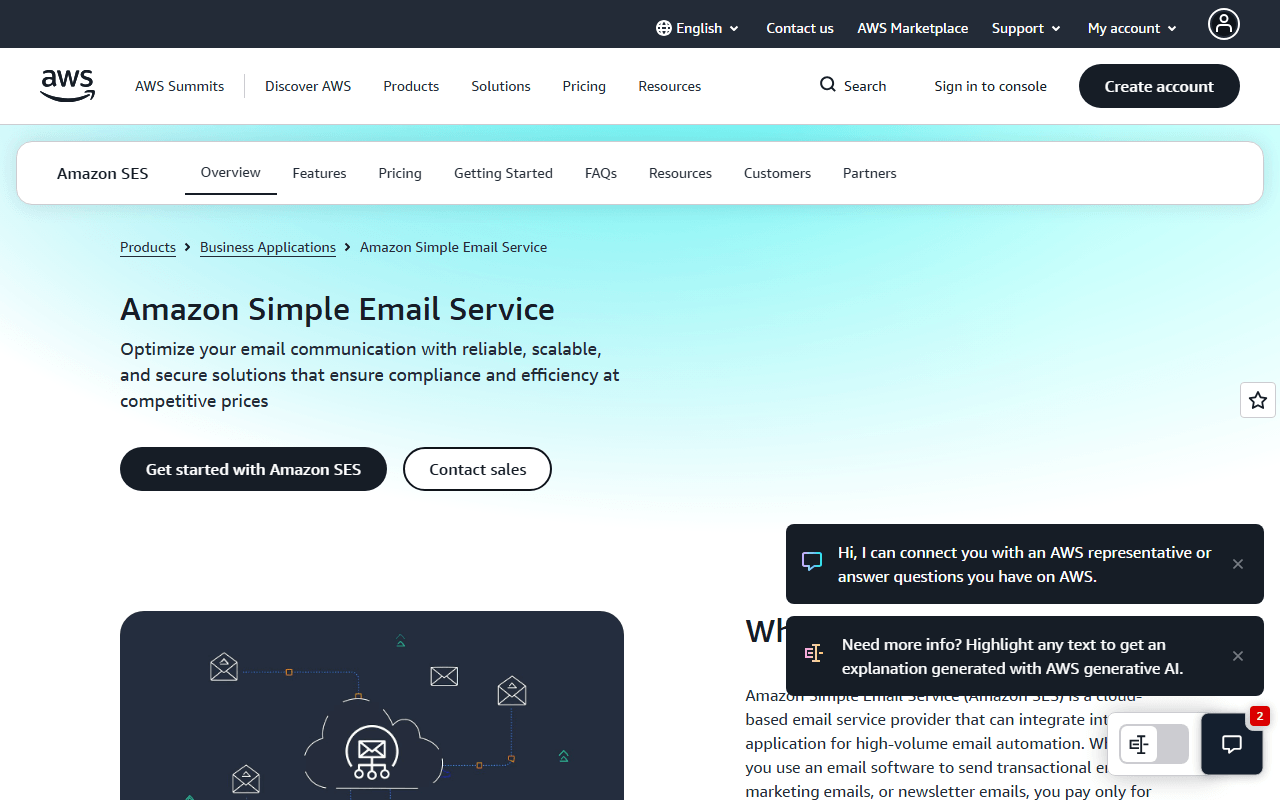
Amazon SES homepage as of Jul 2026
Our Summary
Amazon SES (Simple Email Service) is AWS's cloud email-sending service: a raw, pay-as-you-go SMTP/API relay for high-volume application email. It is famous for price, around $0.10 per 1,000 emails with no monthly minimum, and it is reliable and scalable for transactional and bulk mail. But it is infrastructure plumbing, not a product you send from: there is no UI, inbox, or sequencer (you integrate the API/SMTP into your own app, or bolt on tools like Listmonk or Gophish); new accounts start in a sandbox (tiny limits, only verified recipients) and must request production access, where AWS reviews your use case and frequently denies or scrutinizes email/outbound senders; and you manage everything, domain auth, IP warming, suppression lists, bounce/complaint handling, and reputation, with shared IPs by default and dedicated IPs at about $25/IP/month.
Three reasons the email community consistently flags SES for cold: AWS gates cold use cases (getting out of the sandbox requires production-access approval and AWS is wary of unsolicited outreach); it "does not tolerate cold" (cold campaigns over a shared-IP relay from your own domain tend to land in spam without heavy manual warmup and put your domain reputation at risk); and it is all DIY (no inbox, no warmup, no monitoring, no 1:1 reply workflow, you assemble a sender, warm IPs with third-party tools, build alerting on CloudWatch, and manage suppression yourself). The "$1 for 10K emails" headline ignores the engineering time to make cold work, if AWS even approves it.
Feature Comparison
| Feature |  InboxKit InboxKit |  Amazon SES Amazon SES |
|---|---|---|
| Built For | Email outreach | Transactional / bulk app email (DIY) |
| Email Fit | Yes, purpose-built | Poor; AWS often denies cold use cases |
| What You Send From | Real Google/Microsoft/Azure mailboxes | Raw SMTP/API relay (your domain) |
| Setup | Automated, 60-second DNS | DIY: AWS account, sandbox approval, build sender |
| Interface | Dashboard + sequencer integrations | API/SMTP only (no UI/inbox) |
| Warmup | Isolated warmup network, included | None, you assemble it (3rd-party tools) |
| Monitoring | InfraGuard (blacklist, DNS, auto-pause) | CloudWatch metrics; you build alerting |
| IP Model | Dedicated US IPs, isolated | Shared by default; dedicated ~$25/IP/mo |
| Price | Per mailbox (from $2.50/mailbox/mo) | ~$0.10 / 1,000 emails (cheapest) |
| Best For | Cold campaigns that land, hands-off | Cheap transactional volume, developers |
Switch to InboxKit
Dedicated IPs. Isolated infrastructure. From $2.50/mo.
Pricing Comparison
InboxKit
inboxkit.com
- Google WorkspaceFrom $2.50/mailbox/mo
Real US-IP Google accounts, full admin access. One rate per mailbox, from $2.50/mo on annual billing ($2.70 quarterly, $3.00 monthly). No plans, no slots, no base fee.
- Microsoft 365From $2.50/mailbox/mo
Official Microsoft 365 accounts with admin control. Same flat rate as Google Workspace, no Microsoft premium.
- Azure Mailboxes$30/tenant/mo
Up to 100 mailboxes per tenant on Azure infrastructure. Same price on every cycle.
Amazon SES
aws.amazon.com
- Pay-as-you-go~$0.10 / 1,000 emails
No monthly minimum; cheapest raw sending in the market.
- Dedicated IPs~$25/IP/month
Optional dedicated IPs you must warm and manage yourself.
- Everything elseYour time
Sender app, warmup, monitoring, suppression, and AWS production approval are all DIY.
Pricing Verdict: On raw cost, nothing beats SES (~$0.10 per 1,000 emails), but that is the price of sending packets, not of email that works. With SES you also pay, in time and tools, for a sender app, warmup, monitoring, and reputation management, plus you need AWS to approve the use case at all. InboxKit (from $2.50/mailbox/mo) costs more per unit but bundles real inboxes, warmup, and monitoring with no build required, and cold is actually allowed.
Infrastructure and Deliverability
Managed, Not a Build Project
InboxKit gives you real mailboxes, automated DNS in 60 seconds, isolated warmup, and monitoring out of the box. SES is raw infrastructure you operate, sender app, IP warming, suppression, and CloudWatch alerting are all on you.
No Sandbox or AWS Approval to Fight
Cold outreach is permitted and expected on InboxKit. With SES you must escape the sandbox via production-access approval, which AWS frequently denies or scrutinizes for cold/unsolicited senders.
Real Accounts That Read as a Person
InboxKit sends from real Google/Microsoft/Azure inboxes with two-way replies. SES sends from a raw relay on your own domain over shared IPs, which lands cold mail in spam without heavy manual warmup.
Warmup and InfraGuard Included
Isolated warmup and InfraGuard monitoring (6-hour blacklist checks, DNS drift, bounce tracking, auto-pause) ship with InboxKit. SES has no warmup or monitoring, you build all of it.
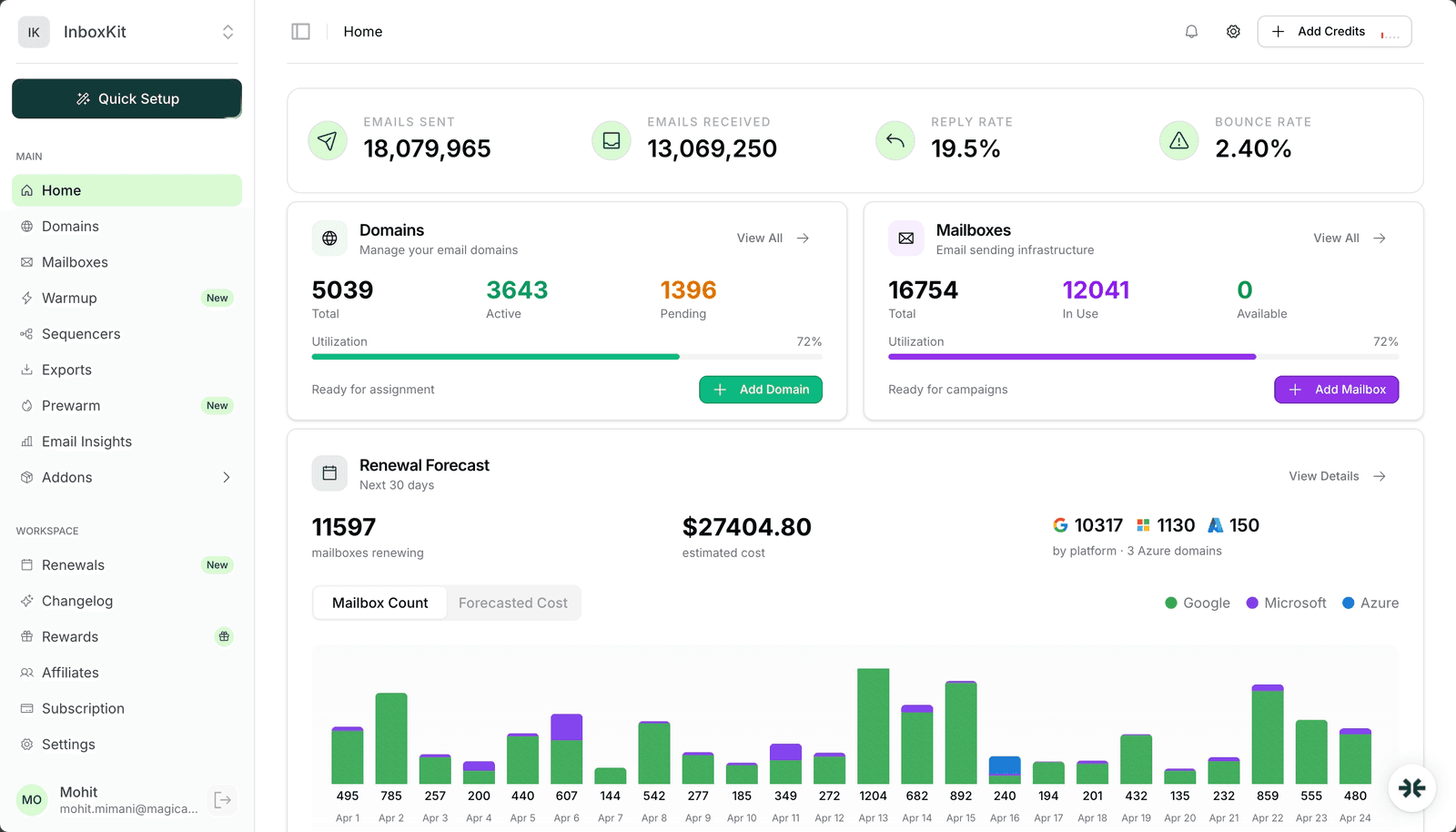
InboxKit dashboard — 18M+ emails, 5,039 domains, 16,754 mailboxes for a single client
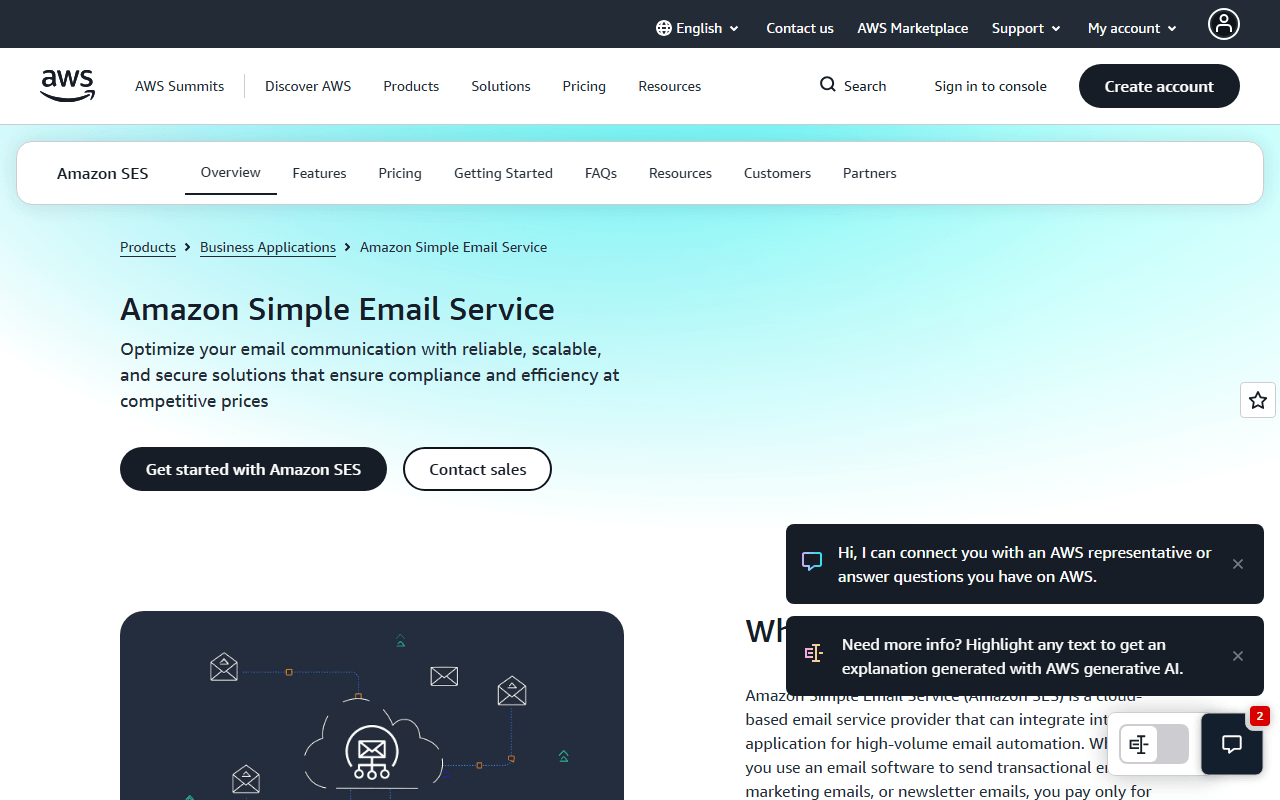
Amazon SES homepage
Who Should Choose What
For email this comes down to "cheapest packets" vs "cheapest outcome." Amazon SES wins on raw price and is excellent for transactional, developer-built sending. But for cold outreach, SES is DIY infrastructure that AWS often will not approve for the use case, with no inboxes, no warmup, and shared-IP reputation you must manage. InboxKit wins for email because it is purpose-built and managed: real Google/Microsoft/Azure mailboxes on dedicated IPs, isolated warmup, two-way replies, and InfraGuard monitoring, ready to send, not a project to build.
Got questions? We've got answers.
It is not recommended. AWS often denies production access for cold/unsolicited use cases, SES's policy prohibits spam, and cold mail over a shared-IP relay typically lands in spam without heavy manual warmup. Use purpose-built infrastructure like InboxKit instead.
Per email, yes (~$0.10/1,000). But that is the cost of sending, not of email that works, you still need a sender app, warmup, monitoring, and AWS approval. InboxKit bundles real inboxes, warmup, and monitoring with no build required.
No inbox or 1:1 workflow, shared-IP reputation, sandbox/approval gating, and it is transactional-grade infrastructure you must warm and monitor yourself. Practitioners note SES "does not tolerate emails."
A sending interface (or Listmonk/Gophish), domain authentication, IP warmup (third-party tools), suppression handling, and monitoring/alerting. InboxKit provides all of that out of the box.
Yes, SES for your application's transactional email, InboxKit for cold sales outreach. They serve different purposes.
Keep Reading
Competitor pricing and feature details were verified in June 2026. Pricing changes often — always confirm current rates on the provider's official website.
Ready to try InboxKit?
Dedicated US IPs. Isolated infrastructure. Real Google & Microsoft accounts from $2.50/mo.