
On this page

 vs
vsInboxKit vs Mailgun: Developer Email API vs Email Infrastructure (2026)
If you landed here weighing InboxKit against Mailgun for email, the answer is short: Mailgun is a developer's transactional email API, not a cold outreach tool. Use Mailgun when your app needs to send transactional email via API/SMTP, it is excellent for that. For cold outreach, it is the wrong tool: shared-IP reputation, no real inboxes, no 1:1 reply workflow, and compliance risk. Use purpose-built infrastructure like InboxKit instead.
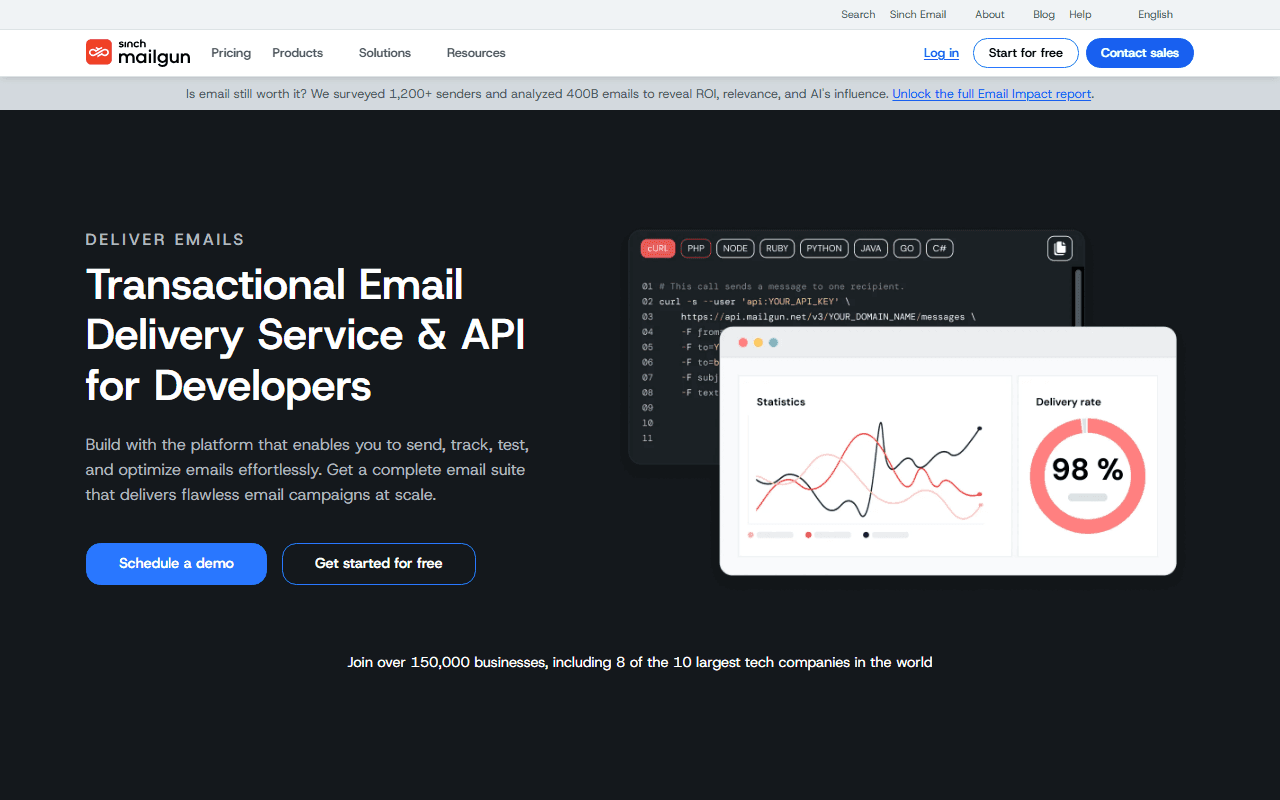
Mailgun homepage as of Jul 2026
Our Summary
Mailgun (mailgun.com) is a transactional email API service "built with developers in mind." You integrate it into your application to send, receive, and track email programmatically over a RESTful API or SMTP relay, order confirmations, password resets, alerts, at scale. Pricing is volume-based: Free (100 emails/day), Basic $15/mo (10K emails), Foundation $35/mo (50K), and Scale $90/mo (100K), with extra emails by the thousand and dedicated IPs as an add-on ($59/IP/month; one included on higher tiers). It serves US and EU regions and sends 600B+ emails a year.
Tellingly, Mailgun has no send button, it is pure infrastructure for applications, not a tool for composing and sending one-to-one outreach. The same structural reasons that rule out other transactional ESPs apply: it is API/SMTP infrastructure for application email with no inbox, no composing interface, and no 1:1 reply handling; standard sending uses shared IP pools that mix your reputation with other senders (dedicated IPs are a $59/IP/month add-on that still needs volume to warm); and the email community is consistent that using Mailgun for cold outreach risks compliance issues or account shutdowns, with deliverability suffering because mail does not come from a real, warmed inbox.
Feature Comparison
| Feature |  InboxKit InboxKit | |
|---|---|---|
| Built For | Email outreach | Developer transactional email (API/SMTP) |
| Email Fit | Yes, purpose-built | No, discouraged; compliance risk |
| What You Send From | Real Google/Microsoft/Azure mailboxes | API/SMTP relay (shared IP pools) |
| Interface | Dashboard + sequencer integrations | API/SMTP only ("no send button") |
| IP Model | Dedicated US IPs, isolated | Shared; dedicated IP add-on ($59/IP/mo) |
| Warmup | Isolated warmup network | Automated IP warm-up (for transactional) |
| Monitoring | InfraGuard (blacklist, DNS, auto-pause) | Deliverability analytics for transactional |
| Replies / 1:1 | Real mailboxes, two-way | Not designed for 1:1 outreach |
| Pricing | Per mailbox (from $2.50/mailbox/mo; 10 × $2.50 = $25/mo on annual billing) | Volume-based ($15 to $90/mo, +$59/IP) |
| Best For | Cold campaigns that land | App/transactional email at scale |
Switch to InboxKit
Dedicated IPs. Isolated infrastructure. From $2.50/mo.
Pricing Comparison
InboxKit
inboxkit.com
- Google WorkspaceFrom $2.50/mailbox/mo
Real US-IP Google accounts, full admin access. One rate per mailbox, from $2.50/mo on annual billing ($2.70 quarterly, $3.00 monthly). No plans, no slots, no base fee.
- Microsoft 365From $2.50/mailbox/mo
Official Microsoft 365 accounts with admin control. Same flat rate as Google Workspace, no Microsoft premium.
- Azure Mailboxes$30/tenant/mo
Up to 100 mailboxes per tenant on Azure infrastructure. Same price on every cycle.
 Mailgun
mailgun.com
- Free$0
100 emails/day for testing and very low volume.
- Basic$15/mo
10,000 emails/month; extra emails by the thousand.
- Foundation$35/mo
50,000 emails/month with added features.
- Scale$90/mo
100,000 emails/month; dedicated IPs $59/IP/month (one included on higher tiers).
Pricing Verdict: The models differ because the jobs differ. Mailgun is volume-based ($15 to $90/mo plus per-thousand overage and $59/IP/month for dedicated IPs), you pay to push transactional volume via API. InboxKit is per mailbox (from $2.50/mailbox/mo), you pay for real cold-sending mailboxes. For cold outreach, Mailgun's per-email pricing is beside the point: it is not built for the use case and risks shutdowns.
Infrastructure and Deliverability
Mailbox-First, Not API-First
Where Mailgun is API-first infrastructure for applications (no inbox, no send button), InboxKit is mailbox-first infrastructure for outbound, real Google/Microsoft/Azure inboxes you actually send campaigns from.
Dedicated, Isolated IPs by Default
InboxKit mail goes out on dedicated US IPs warmed by an isolated network. Mailgun sends over shared pools by default; dedicated IPs are a $59/IP/month add-on that still must be warmed.
Built for 1:1 Replies and Sequencers
Cold outreach needs two-way replies and sequencer integration. InboxKit connects to Smartlead, Instantly, Lemlist, and 20+ more; Mailgun has no 1:1 reply workflow.
No Compliance/Shutdown Risk for Cold
Cold outreach is permitted and expected on InboxKit, with InfraGuard monitoring to protect reputation. Running cold over Mailgun risks compliance issues and account shutdowns.
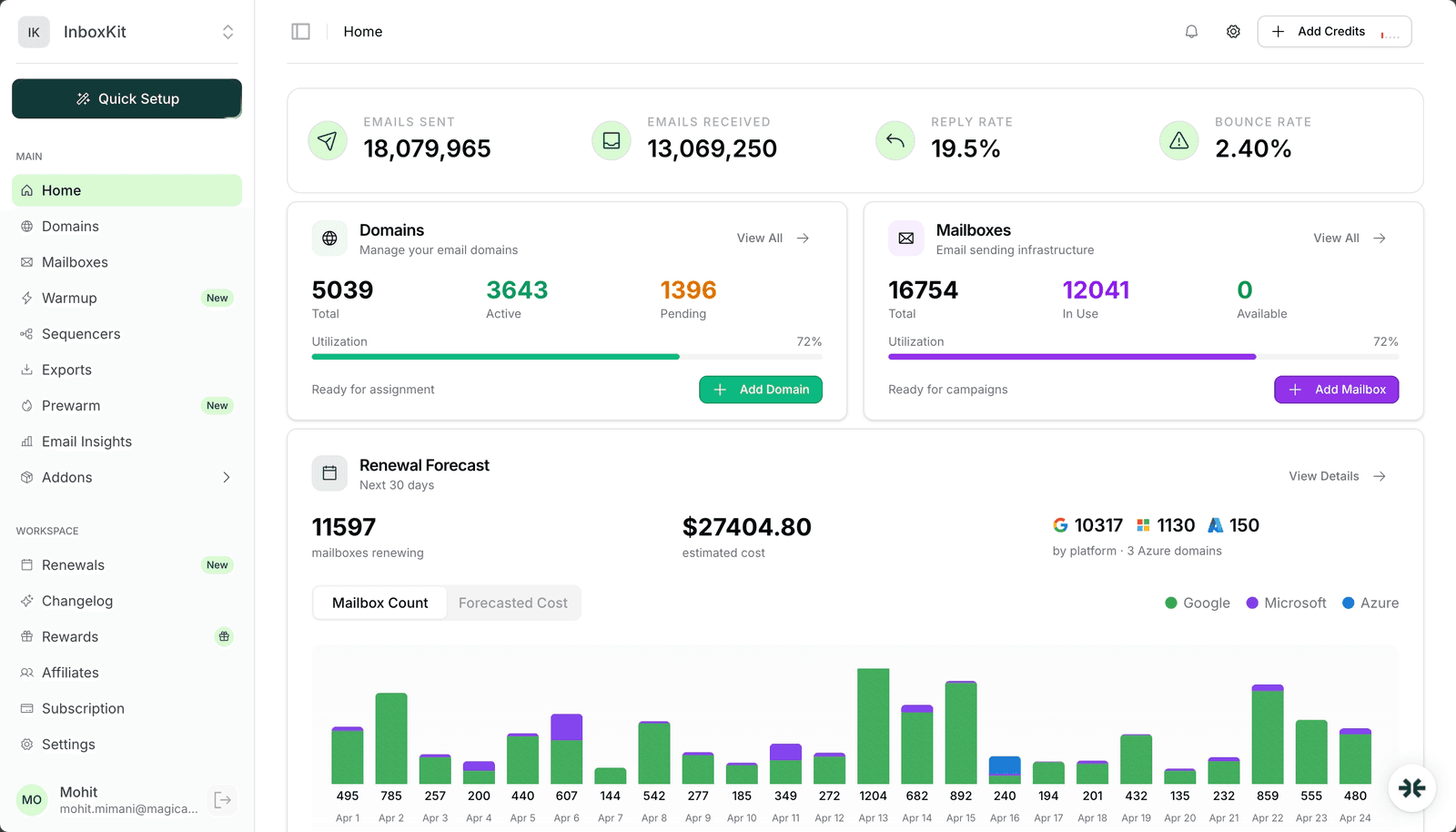
InboxKit dashboard — 18M+ emails, 5,039 domains, 16,754 mailboxes for a single client
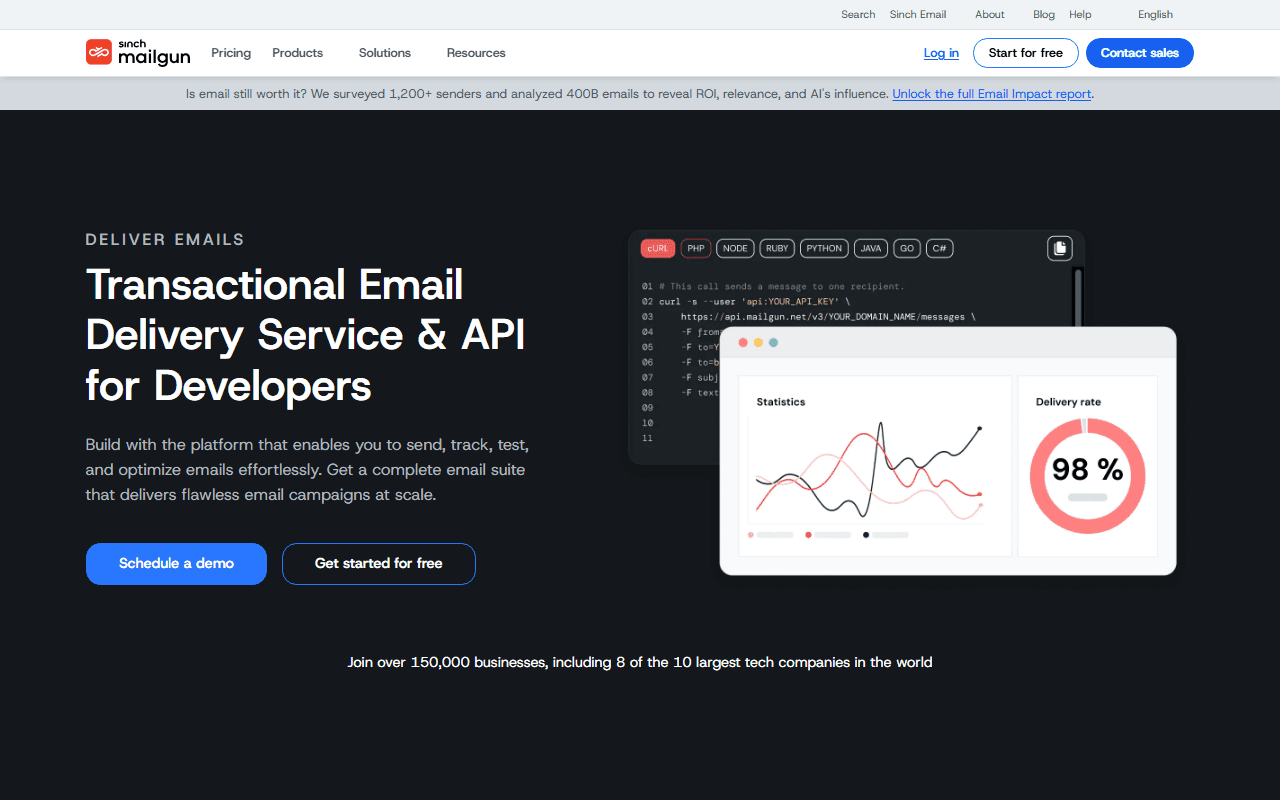
Mailgun homepage
Who Should Choose What
Mailgun wins for developer transactional email, a world-class API for application sends. But for cold outreach, Mailgun is transactional infrastructure on shared IPs with no real inboxes and real compliance risk. InboxKit wins for email because it is purpose-built: real Google/Microsoft/Azure mailboxes on dedicated IPs, isolated warmup, two-way replies, and InfraGuard monitoring. Like SendGrid, Mailgun can coexist with InboxKit, Mailgun for your app's transactional mail, InboxKit for cold sales outreach, they are not substitutes.
Got questions? We've got answers.
You shouldn't. Mailgun is a transactional email API on shared IPs, not built for outreach; you risk compliance issues, shutdowns, and poor deliverability. Use email infrastructure like InboxKit instead.
It is API/SMTP infrastructure for application email, with no inbox or 1:1 reply workflow, shared-IP reputation by default, and content that does not read as a real person. The email community consistently advises against it.
Yes, for its purpose: transactional email for developers at scale, with a strong API, webhooks, and EU/US data regions. It is just the wrong tool for email.
Real mailbox accounts on dedicated IPs with warmup and monitoring, which is what InboxKit provides (Google/Microsoft/Azure accounts + InfraGuard).
Yes. Run Mailgun for your application's transactional email and InboxKit for cold sales outreach, different jobs, different tools.
Keep Reading
Competitor pricing and feature details were verified in June 2026. Pricing changes often — always confirm current rates on the provider's official website.
Ready to try InboxKit?
Dedicated US IPs. Isolated infrastructure. Real Google & Microsoft accounts from $2.50/mo.