
On this page

 vs
vsInboxKit vs SendGrid: Why SendGrid Isn't Built for Email (2026)
If you are comparing InboxKit and SendGrid for email, the blunt truth is that SendGrid is not built for cold outreach, and its own terms prohibit it. Use SendGrid for transactional and permission-based marketing email, it is excellent at that. For email, don't, you will fight shared-IP reputation, spam placement, and account-suspension risk. Use purpose-built infrastructure like InboxKit instead: real Google/Microsoft/Azure mailboxes on dedicated US IPs with InfraGuard monitoring.

SendGrid homepage as of Jul 2026
Our Summary
SendGrid (now Twilio SendGrid) is a transactional and marketing email platform: a high-volume Email API/SMTP service plus Marketing Campaigns for opt-in newsletters. It is built to deliver application email, order confirmations, password resets, shipping alerts, and bulk marketing to subscribers who opted in, sending 200B+ emails a month. Pricing is volume-based: a free tier for low daily volume, paid plans that scale by monthly email volume, and dedicated IPs available on higher tiers; Marketing Campaigns is priced by contacts. It is outstanding at what it is for.
What it is not is an email tool. SendGrid is an API/SMTP relay that sends from shared IP pools, not a provider of real, individual mailbox accounts for one-to-one outreach. Three structural reasons rule it out for cold, all well documented by the email community: its acceptable-use policy bans unsolicited outreach and purchased/non-opt-in lists (suspension risk); standard tiers send over shared IP pools, mixing your reputation with thousands of other senders including spammers; and it sends as a bulk relay rather than from a real inbox, so it does not look like a person and is not designed for the two-way reply handling outreach depends on. The consistent community verdict: email via SendGrid goes to spam.
Feature Comparison
| Feature |  InboxKit InboxKit | |
|---|---|---|
| Built For | Email outreach | Transactional + marketing email |
| Email Allowed? | Yes, it's the whole point | No, prohibited by acceptable-use policy |
| What You Send From | Real Google/Microsoft/Azure mailboxes | API/SMTP relay (shared IP pools) |
| IP Model | Dedicated US IPs, isolated | Shared pools (dedicated on higher tiers) |
| Looks Like a Person? | Yes, real inbox accounts | No, bulk relay sends |
| Warmup | Isolated warmup network | None (not designed for cold) |
| Monitoring | InfraGuard (blacklist, DNS, auto-pause) | Deliverability analytics for transactional |
| Replies / 1:1 | Real mailboxes, two-way | Not designed for 1:1 reply handling |
| Best For | Cold campaigns that land | Receipts, alerts, opt-in newsletters |
Switch to InboxKit
Dedicated IPs. Isolated infrastructure. From $2.50/mo.
Pricing Comparison
InboxKit
inboxkit.com
- Google WorkspaceFrom $2.50/mailbox/mo
Real US-IP Google accounts, full admin access. One rate per mailbox, from $2.50/mo on annual billing ($2.70 quarterly, $3.00 monthly). No plans, no slots, no base fee.
- Microsoft 365From $2.50/mailbox/mo
Official Microsoft 365 accounts with admin control. Same flat rate as Google Workspace, no Microsoft premium.
- Azure Mailboxes$30/tenant/mo
Up to 100 mailboxes per tenant on Azure infrastructure. Same price on every cycle.
 SendGrid
sendgrid.com
- Free$0
Low daily volume for testing and small transactional needs.
- Email API (paid)Volume-based
Paid plans scale by monthly email volume; dedicated IPs available on higher tiers.
- Marketing CampaignsContact-based
Priced by number of marketing contacts for opt-in newsletters.
Pricing Verdict: The pricing models are not comparable because the products are for different jobs. SendGrid is volume-based, you pay to push application/marketing email at scale. InboxKit is per mailbox (from $2.50/mailbox/mo), you pay for real cold-sending mailboxes that are actually allowed to do outreach and engineered to land. For email, SendGrid's lower per-email cost is irrelevant because the use case is prohibited and the mail does not reach the inbox.
Infrastructure and Deliverability
Cold Outreach Is Permitted and Expected
InboxKit is engineered for exactly the use case SendGrid prohibits. There is no acceptable-use risk, no account to lose for sending cold, it is what the product is for.
Real Inboxes on Dedicated, Isolated IPs
You send from real Google/Microsoft/Azure mailboxes on dedicated US IPs, warmed by an isolated network, so your reputation is your own, not mixed with thousands of other senders in a shared pool.
Reads as a Genuine 1:1 Message
Email works when it looks like a person wrote it. InboxKit mail comes from a real inbox with two-way replies, not a bulk relay that filters and recipients treat differently.
InfraGuard Monitoring + Sequencer Integrations
Blacklist checks every 6 hours, DNS drift detection, bounce tracking, and auto-pause, plus 24+ sequencer integrations (Smartlead, Instantly, Lemlist), the email tooling a transactional ESP simply does not provide.
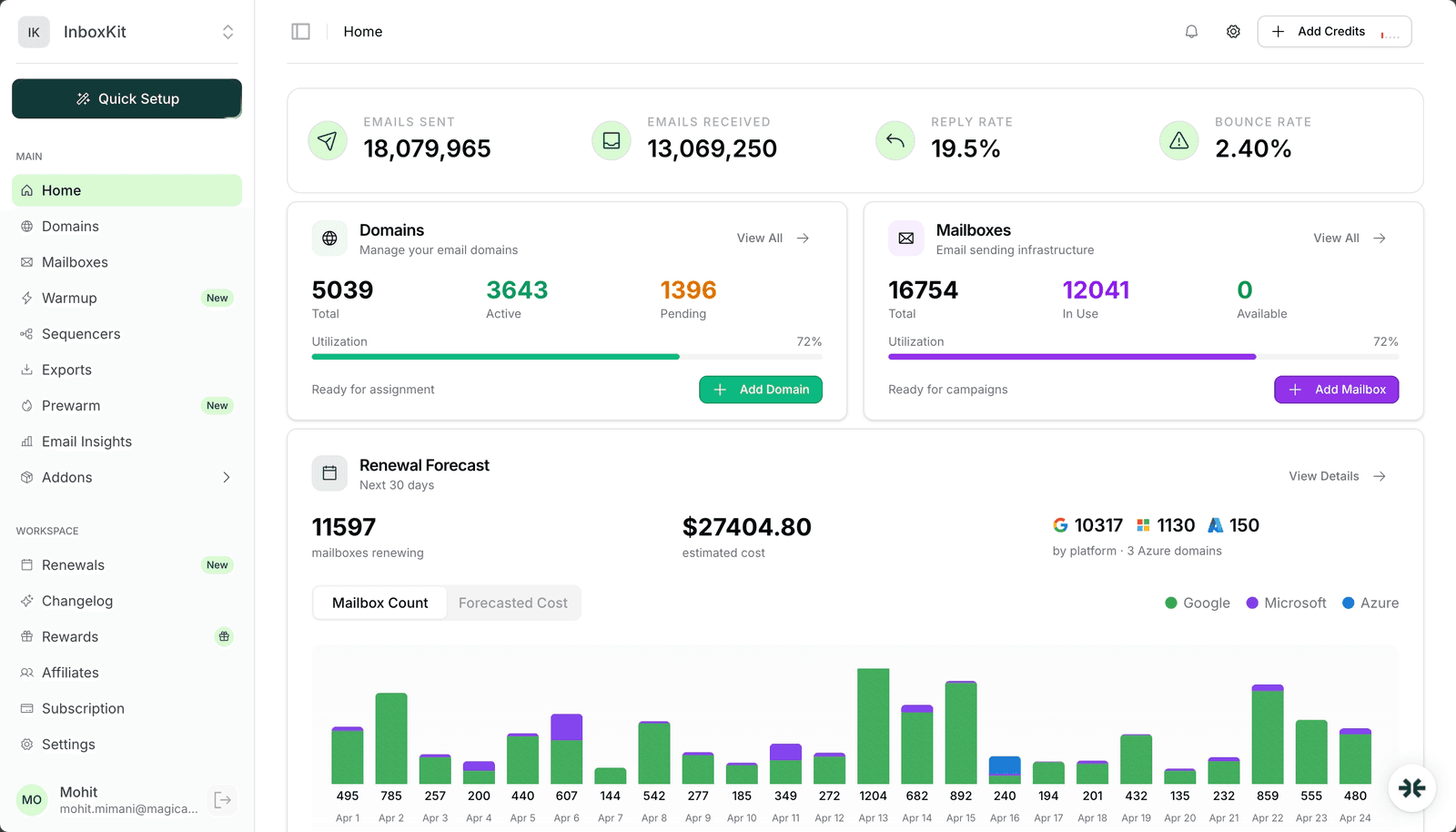
InboxKit dashboard — 18M+ emails, 5,039 domains, 16,754 mailboxes for a single client

SendGrid homepage
Who Should Choose What
SendGrid wins for transactional and opt-in marketing email, it is a world-class platform for that. But for cold outreach, SendGrid prohibits it, sends over shared-IP reputation, and lands in spam. InboxKit wins for email because it is built for it: real Google/Microsoft/Azure mailboxes on dedicated IPs, isolated warmup, two-way replies, and InfraGuard monitoring. The two can coexist in a business, SendGrid for your app's transactional mail, InboxKit for your sales team's cold outreach, they are just not substitutes.
Got questions? We've got answers.
You shouldn't. SendGrid's acceptable-use policy prohibits unsolicited/cold outreach and purchased lists, and email over its shared IPs typically lands in spam. Use email infrastructure like InboxKit instead.
Three reasons: its terms ban cold outreach (suspension risk), shared IP pools mix your reputation with spammers, and it sends as a bulk relay rather than from a real inbox, so it does not look like a person and is not built for two-way replies.
No, it is excellent for what it is designed for: transactional email and opt-in marketing at scale. It is just the wrong tool for cold outreach.
Purpose-built infrastructure, real mailbox accounts on dedicated IPs with warmup and monitoring. That is what InboxKit provides (Google/Microsoft/Azure accounts + InfraGuard).
Yes. Many companies run SendGrid for app/transactional email and InboxKit for cold sales outreach. They serve different purposes.
Keep Reading
Competitor pricing and feature details were verified in June 2026. Pricing changes often — always confirm current rates on the provider's official website.
Ready to try InboxKit?
Dedicated US IPs. Isolated infrastructure. Real Google & Microsoft accounts from $2.50/mo.