
LearnReviews
Clay Review 2026

By Saksham JainPublished on: May 26, 2026 · Updated: Sep 6, 2026 · 11 min read · Last reviewed: Sep 2026
TL;DR
Clay is widely regarded as one of the most capable data enrichment and orchestration platforms in outbound, and the verdict reflects that: per Clay's own marketing, 150+ providers in a waterfall, Claygent AI research, and a flexible spreadsheet-style builder that covers most enrichment workflows operators ask for. For data-driven teams it is a strong pick. The honest catch is that Clay is expensive, has a real learning curve, and, critically, is not a sending tool. Clay builds the list; something else has to send it. All pricing and feature claims here reflect what Clay publicly advertised at the time of writing.
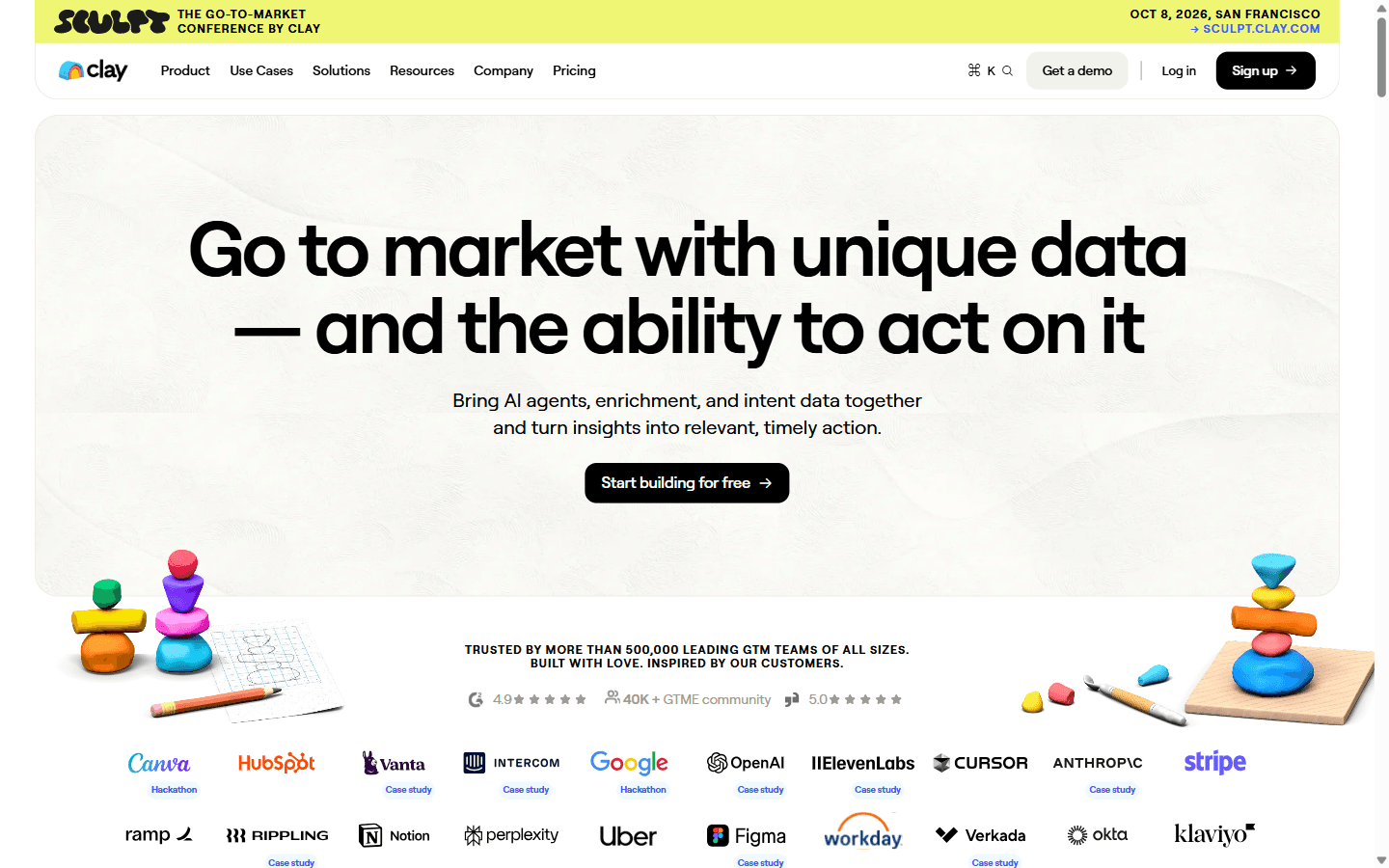
Clay (clay.com) is a data orchestration platform. You start with a list (or scrape one), then chain together enrichment steps that pull from what Clay advertises as 150+ data sources, run AI research, and format the output into clean, campaign-ready records. Think of it as a spreadsheet where every column can call an API, an AI model, or a data provider.
The important framing for email is that Clay is upstream of sending. It finds and enriches prospects; it does not send sequences or warm mailboxes. The standard workflow is to build a precise, enriched list in Clay, then push it to a sequencer (Smartlead, Instantly, lemlist, Woodpecker, and others all advertise Clay integrations) that does the actual outreach. Clay also exposes a native email sequencer on its plans, but in practice most teams use it as a starting point rather than a production sender.
Clay's current self-serve plans as advertised on clay.com/pricing at the time of writing (annual billing) look like this. Prices may change.
| Plan | Price (annual) | Data credits | Actions | Best for |
|---|---|---|---|---|
| Free | $0 | 100/mo | 500/mo | Trying Clay, light experimentation |
| Launch | from $185/mo | 2,500/mo (30K/yr) | 15,000/mo | Individuals, small teams |
| Growth | from $495/mo | 6,000/mo (72K/yr) | 40,000/mo | Scaling GTM teams |
| Enterprise | Custom annual commitment | 100,000+/mo | 200,000+/mo | Large orgs |
Clay's pricing card shows lower headline rates than the FAQ on the same page in some currencies and discount toggles; we report the FAQ figures here. Honest notes on the real cost:
Here's the honest read on Clay for email: Clay does very little for deliverability, because Clay does not send at scale. Sharper targeting and deeper personalization can lift reply rates, but inbox placement is entirely a function of the sending tool and the infrastructure behind it.
In fact, Clay can quietly hurt deliverability if misused. Enriching with unverified emails and pushing them straight to a sequencer raises bounce rates, and bounces are one of the fastest ways to damage sender reputation. The right pattern is to verify enriched emails before sending and to send from healthy, monitored mailboxes. Clay sharpens the data; it does not protect the domains and inboxes that data flows through.
The summary below reflects publicly advertised strengths and limitations relative to other B2B data and enrichment platforms at the time of writing.
Pros
Cons
Good fit:
Bad fit:
| Option | What it is | Strength | Best for |
|---|---|---|---|
| Clay | Data orchestration | Waterfall enrichment + Claygent AI | Power data workflows |
| Apollo | Data + light engagement | Affordable B2B database | Simpler prospecting |
| Smartlead / Instantly | Email sequencers | Volume sending and warmup | The sending layer |
| InboxKit | Mailbox infrastructure + InfraGuard | Mailboxes + real-time monitoring | The infrastructure layer under any stack |
The honest positioning: Clay is a data tool, and InboxKit isn't a competitor, the two sit at opposite ends of the same workflow. Clay enriches your prospects; a sequencer sends to them; and InboxKit provides the mailboxes, domains, and authentication underneath, plus InfraGuard monitoring (real-time blacklist alerts, DNS drift detection, bounce-rate alerting). Because InboxKit is sequencer-agnostic, you can enrich in Clay, send through any sequencer, and keep the same monitored infrastructure regardless of the tools on top.
Rating: 8.5 / 10
Clay is one of the most capable data platforms in outbound, and for teams that prioritise data quality and personalization, it is a strong choice. The waterfall enrichment, Claygent AI, signals, and flexibility tend to justify the price for power users that can run it well.
It isn't a 10 because it is expensive and complex, top-ups carry a premium (per Clay's own FAQ), and it does only one job, data, leaving sending and deliverability to other tools. Used carelessly, it can also hurt deliverability indirectly by feeding unverified emails into campaigns.
If you want the enriched lists Clay builds to actually reach the inbox, pair them with verified sends from monitored, isolated mailboxes that run in any sequencer, see how InboxKit compares.
Per clay.com/pricing: a Free plan ($0, 100 Data Credits and 500 Actions per month), Launch from $185/mo annual (2,500 Data Credits and 15,000 Actions per month), Growth from $495/mo annual (6,000 Data Credits and 40,000 Actions per month), and Enterprise on a custom annual commitment with 100,000+ Data Credits and 200,000+ Actions per month.
Not as a primary product. Clay enriches and prepares data, then pushes to a sequencer (Smartlead, Instantly, lemlist, Woodpecker, and others) to actually send at scale. The free plan does include a basic native sequencer, but most teams treat that as a starting point.
Two separate currencies. Data Credits are spent when you purchase data from Clay's 150+ providers in its marketplace. Actions measure the platform work Clay does on your behalf, running a table, calling an AI model, sending data to a third-party system, or exporting. If an enrichment returns no result, you are not charged Data Credits or Actions.
For data-driven teams that need deep enrichment and personalization, yes. For simple prospecting on a budget, it's overkill and expensive. Pair it with a dedicated sequencer and monitored infrastructure for the best results.
Only indirectly. Sharper targeting can lift reply rates, but unverified data can raise bounces and hurt reputation. Deliverability is decided by your sending tool and the infrastructure underneath it, not by Clay.
Free tools and pages that go with this guide.
 Reviews
 Saksham JainReviewsSaksham JainReviewsSaksham JainReviewsSaksham JainReviews
 Mohit Mimani
From $2.50/mailbox/mo. No plans or slots. Automated DNS, warmup, and InfraGuard monitoring included.