LearnSolutions
Cold Email Infrastructure for Healthtech B2B Sales

By Mohit MimaniPublished on: Apr 11, 2026 · 9 min read · Last reviewed: Apr 2026
TL;DR
Healthtech B2B sales teams targeting hospitals and health systems run into HIPAA assumptions, 9-18 month procurement cycles, and IT security reviews. Here is the infrastructure that handles all three.
The single most common misconception in healthtech sales is that cold email to a hospital is a HIPAA-regulated communication. It is not. HIPAA governs Protected Health Information, individually identifiable health information tied to a specific patient. Cold outbound email to a CIO, CMO, or VP of Revenue Cycle at a hospital contains no PHI and is therefore not HIPAA-regulated at all. The sales rep is emailing a business contact at a business email address about a business decision.
HIPAA becomes relevant the moment a reply contains PHI, or the moment a sales conversation moves into a product demo that exposes real patient data. That is when the vendor needs a Business Associate Agreement and encryption controls at rest and in transit. Until that moment, cold email is regulated by CAN-SPAM, not HIPAA.
The practical implication: healthtech sales teams can run cold outbound on standard infrastructure as long as PHI never touches the sending mailboxes. The operational rule is simple: never include patient names, dates of service, diagnoses, or any other identifier in an outbound email, and train reps to immediately move any reply that contains PHI into the company's BAA-covered environment.
Here is how InboxKit infrastructure scales for healthtech sales teams:
| Team Size | Mailboxes | Domains | Monthly Cost | ARR per Customer |
|---|---|---|---|---|
| Solo AE | 4-8 | 2-3 | $39 | $20K-$100K |
| Small sales team (3-5 AEs) | 15-25 | 6-10 | $89-$150 | $50K-$250K |
| Mid-market healthtech (5-15 AEs) | 30-75 | 12-25 | $150-$289 | $100K-$500K |
| Enterprise healthtech (15-50 AEs) | 100-200 | 30-60 | $350-$700 | $250K-$2M |
InboxKit pricing: Professional $39/mo for 10 mailboxes, Agency $99/mo for 30, Enterprise $299/mo for 100. Warmup add-on at $3/mailbox/month. All mailboxes are real Google Workspace and Microsoft 365 accounts on US-based IPs.
Keep the main healthtech product domain isolated from cold outbound. acmehealth.com is the domain where clinical users log in, API keys route, and customer-support tickets flow. Cold outreach reputation must not touch it.
acmehealth-advisors.comacmehealth-research.comacme-clinicalops.comHospital IT security teams run automated checks on sender domains before allowing recipients to reply. Clean WHOIS data and matching brand identity pass those checks; shell domains fail them and get auto-filtered.
DMARC at p=reject is strongly recommended. Healthcare organizations are high-value phishing targets, and hospital IT teams are increasingly strict about rejecting unauthenticated senders. A properly configured DMARC policy signals sophistication and passes through the enterprise mail filters used at Epic, Cerner, Meditech, and other hospital IT shops.
Use .com only. Clinical decision-makers and hospital procurement teams treat .com as default and everything else as suspect. A .io or .co domain gets flagged automatically at most hospital mail gateways.
Healthtech B2B outreach targets a buying committee that varies by product category. The recurring personas:
Sending volume should match the seniority of the target. A cold email to a CMO is fundamentally different from a cold email to a staff nurse manager. Target senior clinical and administrative roles at 15-25 emails/day per mailbox. Procurement and supply chain contacts can handle higher volumes at 30-50/day.
Healthcare procurement is slow. A $250K healthtech contract at a mid-sized health system routinely takes 9-18 months from first touch to signed MSA. Cold email cadence has to match that pace:
For a mid-market healthtech company with 8 AEs, the sustainable volume is 1,200-2,400 cold emails per day, or 25,000-50,000 per month. At typical healthcare meeting-booking rates of 2-4% and close rates of 10-15% on 12-month cycles, that is 5-30 new signed contracts per quarter.
The compliance rules that actually matter for healthtech cold email:
See the full cold email compliance guide for the CAN-SPAM and GDPR details.
Healthcare sales cycles are long enough that a silent deliverability drop is catastrophic. A 48-hour blacklist hit in month 3 of a 12-month sales cycle means a quarter's worth of nurture touches never reach the buying committee, and the sales rep has no visibility into why the deal went cold.
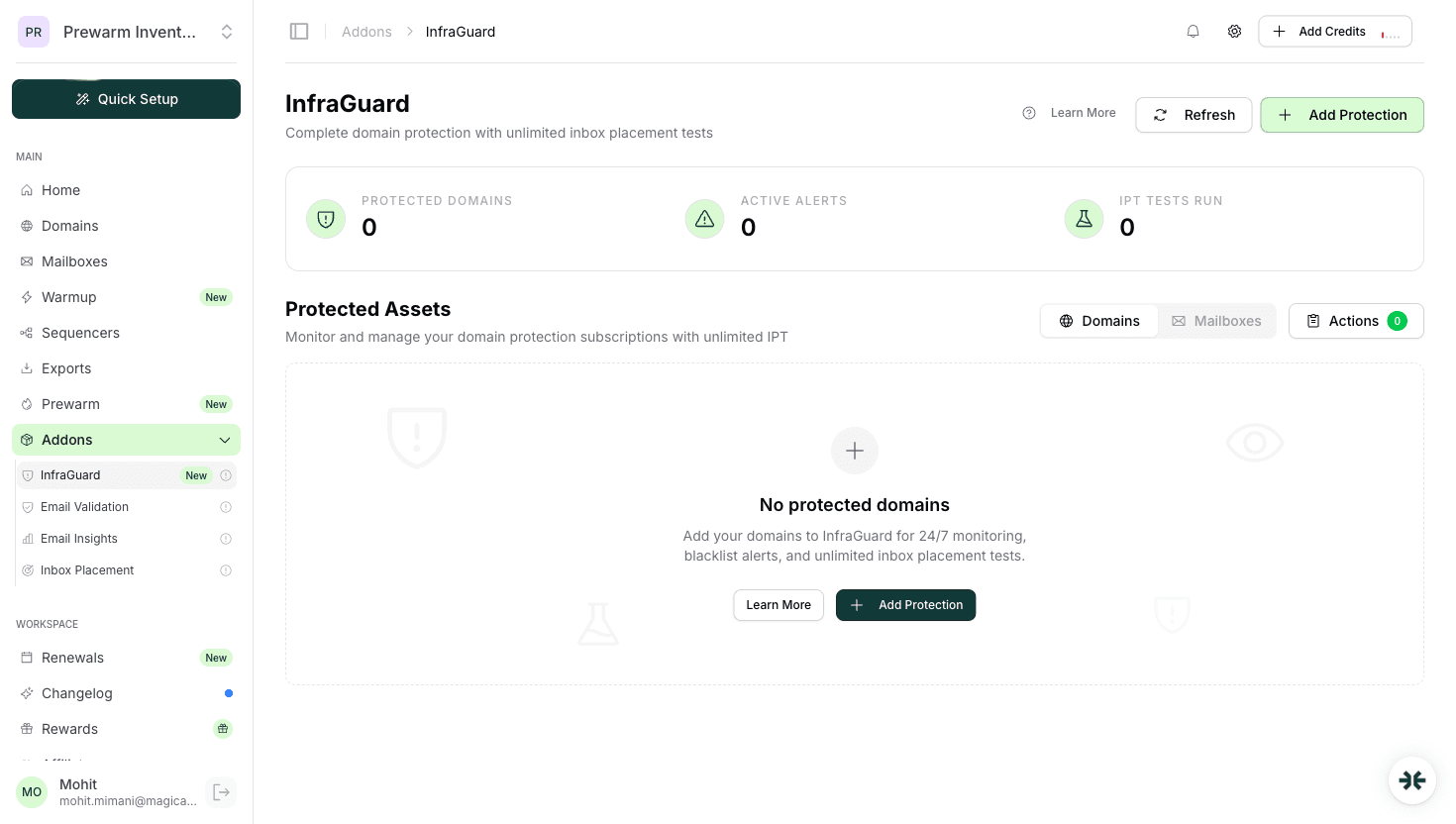
InboxKit's InfraGuard is built for this failure mode:
For a healthtech sales team where each mailbox is carrying part of a $250K-$2M pipeline opportunity, the $3/mailbox/month warmup add-on plus InfraGuard (first month free, then per-domain billing) is the cheapest insurance in the stack.
No. HIPAA governs Protected Health Information, data tied to specific patients. Cold outbound to business contacts about business decisions contains no PHI and is not HIPAA-regulated. HIPAA becomes relevant only when a reply contains PHI, at which point the rep must move the conversation into a BAA-covered environment.
Yes, in the signature or a follow-up touch. Hospital CISOs require HIPAA compliance documentation as part of vendor qualification. Including a link to the firm's trust center (SOC 2 report, HITRUST certification, HIPAA posture) accelerates the CISO review step in the procurement cycle.
9-18 months from first cold email touch to signed contract, for mid-market health systems. Larger IDNs and academic medical centers can run 18-36 months. The infrastructure has to support long nurture cadences without reputation drift across the full cycle.
Solo AE: 4-8 mailboxes ($39/month). Small team 3-5 AEs: 15-25 mailboxes ($89-$150/month). Mid-market 5-15 AEs: 30-75 mailboxes ($150-$289/month). Enterprise 15-50 AEs: 100-200 mailboxes ($350-$700/month). All on real Google Workspace and Microsoft 365 accounts, US-based IPs, with isolated warmup.
 Saksham Jain
 Rahul LakhaneyRahul LakhaneySaksham Jain
Plans from $39/mo with 10 mailboxes included. Automated DNS, warmup, and InfraGuard monitoring included.